

Here’s the short version: check your system’s age and repair cost against a simple threshold, get an honest load calculation instead of a guess, compare efficiency ratings on real numbers, and pick a contractor who explains the math instead of rushing you. That is how to buy a new HVAC system without overpaying or getting talked into more equipment than your house needs. Wagner’s residential HVAC team walks Chapin and Midlands homeowners through each of those steps before any number goes on a quote.
How to Buy a New HVAC System in Six Steps

Buying a new system means six decisions, not one. Skip one and you risk overpaying or ending up with equipment that never keeps up.
- Decide repair or replace. Multiply the unit’s age in years by the repair estimate. Over $5,000 and replacement usually wins. See the quick test below for South Carolina specifics.
- Get a Manual J load calculation. This is the only accurate way to size a system to your actual house, not a rule of thumb.
- Compare SEER2 ratings side by side. Ask every contractor for the number and check it against the current regional minimum.
- Pick the right system type for your house. A central split system, heat pump, or ductless mini-split solve different problems. Settle this before you ask for pricing.
- Get three quotes on the identical scope of work. Same equipment tier, same scope, written down, so you are comparing prices and not guessing what is included.
- Verify the license and ask about a maintenance plan. Confirm the license number, confirm insurance, and ask what a maintenance agreement would cost to protect the new system once it is installed.
Do all six and you will walk into any contractor conversation already knowing what a fair answer sounds like.
Repair or Replace? Run This Quick Test First
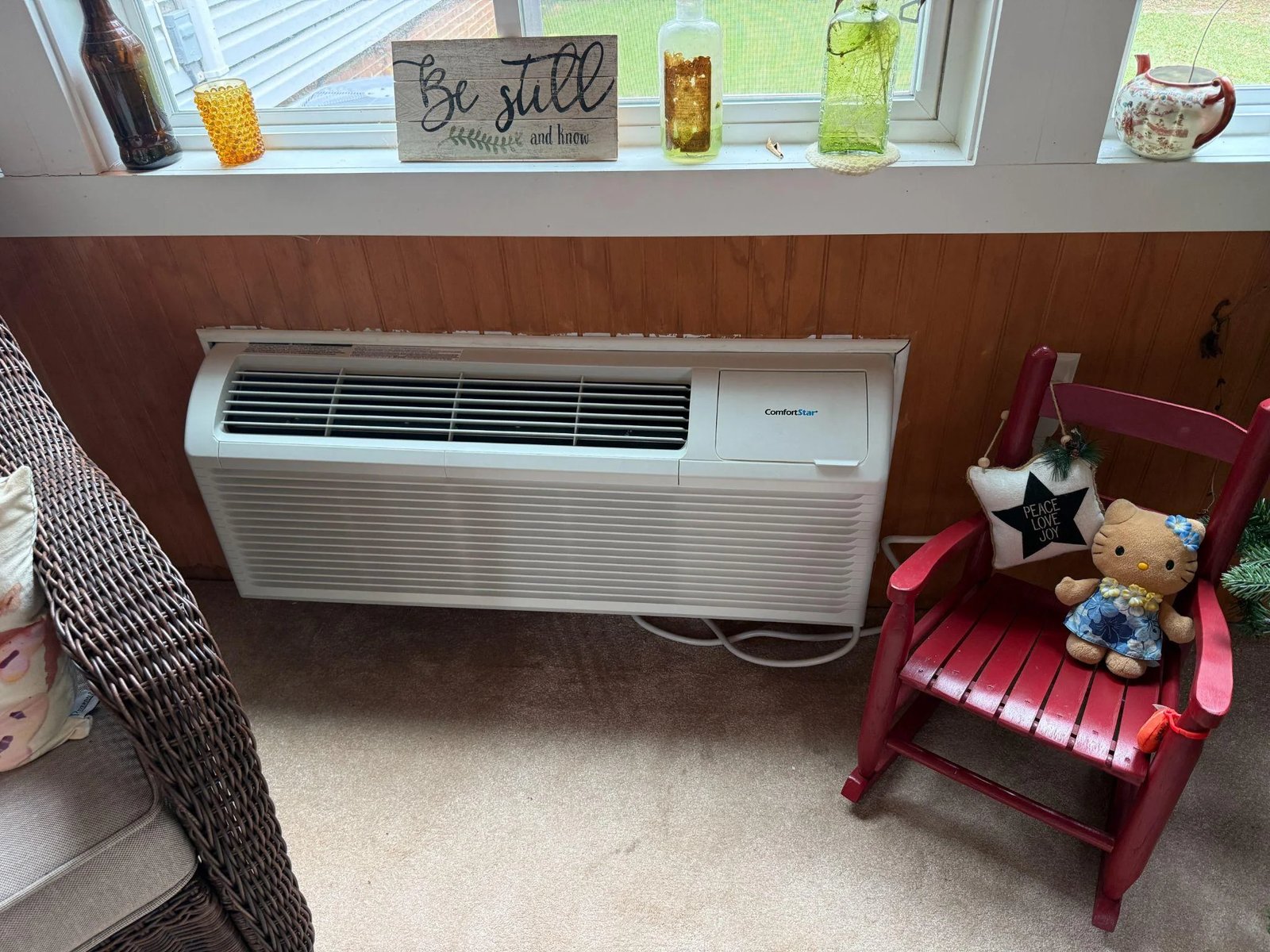
The simplest gut check: multiply your system’s age in years by the estimated repair cost. Above $5,000, replacement is usually the better money.
- The math test: a 12-year-old unit with a $500 repair bill sits well under that $5,000 line and is almost always worth fixing.
- The age cutoff: past 15 years, a system is near the end of its service life regardless of repair cost.
- The refrigerant flag: if it still runs on R-22, that is a harder stop. R-22 has not been manufactured domestically in years, so parts cost more and take longer to source.
- The climate factor: a system that has run flat out every South Carolina summer for over a decade has logged more hours than the same unit would in a milder climate, which shortens its real lifespan.
Signs Your System Is Telling You It’s Done
A handful of patterns show up again and again before a system fails for good:
- Uneven cooling between rooms that did not used to happen
- Energy bills climbing with no clear cause, like a new appliance or a rate hike
- Breakdowns more than once a season
- The compressor or fan motor pulling hard enough on startup to trip the breaker
- Humidity that never quite gets under control even when the thermostat says it is cold enough
Any one of these alone might just mean a repair. Several together, especially on a system already past 12 to 15 years old, usually means it is time to start getting quotes instead of waiting for the breakdown that leaves you without air conditioning in August.
Why South Carolina Summers Change What You Need
A system sized for Phoenix or Minneapolis is not sized right for the Midlands. South Carolina summers run hot and heavy with humidity, and a system that cools the air but does not pull enough moisture out of it leaves a house feeling sticky at 72 degrees. That is usually a sign of an oversized unit cycling off before it finishes dehumidifying, not a thermostat problem.
Winters here are mild but not nonexistent, with nights in the 30s showing up through January, so a system still needs real heating capacity. Older Midlands homes often have ductwork never sized for today’s higher-efficiency equipment, which is why a load calculation has to account for your actual ducts, not just square footage.
Get a Manual J Load Calculation Before You Buy Anything

A Manual J load calculation is the industry standard for sizing equipment to a specific house. It factors in square footage, insulation, window area, ceiling height, and local climate data. A contractor who skips it and just matches your old unit’s size is guessing, not sizing.
- Oversized: cools the house fast, then shuts off before it has pulled out enough humidity, so rooms feel clammy even at the right temperature. It also cycles on and off more, wearing out components faster than a correctly sized unit.
- Undersized: runs constantly and still cannot keep up on the hottest days.
Ask every contractor for their Manual J numbers in writing before you compare quotes. It costs you nothing to request and protects you from a sales pitch dressed up as a quote.
SEER2 Ratings and What They Actually Mean for Your Bill
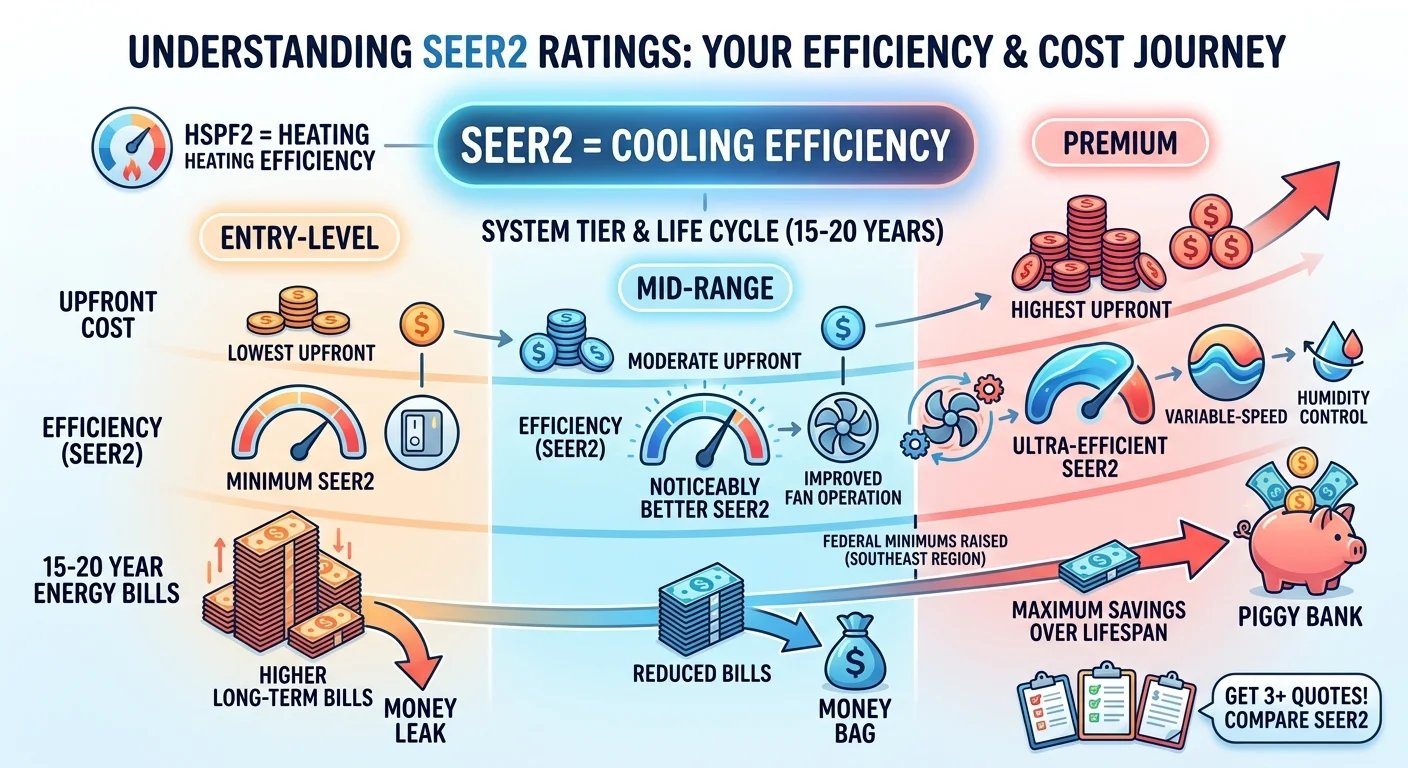
SEER2 measures cooling efficiency. The higher the number, the less electricity the system uses to produce the same amount of cooling, though the upfront price climbs along with it. Heat pumps carry a second rating, HSPF2, for heating efficiency.
South Carolina sits in the Southeast efficiency region, where the federal minimum SEER2 is higher than it was a few years ago. Even a baseline new system today outperforms a baseline system from a decade ago, but the real savings show up once you move beyond the minimum.
| Tier | What it typically means |
|---|---|
| Entry-level | Meets the current minimum, lowest upfront cost |
| Mid-range | Noticeably better efficiency, moderate price step up |
| Premium | Variable-speed operation, strongest humidity control, highest upfront cost |
Compare SEER2 across at least three quotes before deciding. Over a system’s 15 to 20 year lifespan, the efficiency difference compounds into real money.
Which System Type Actually Fits Your Home
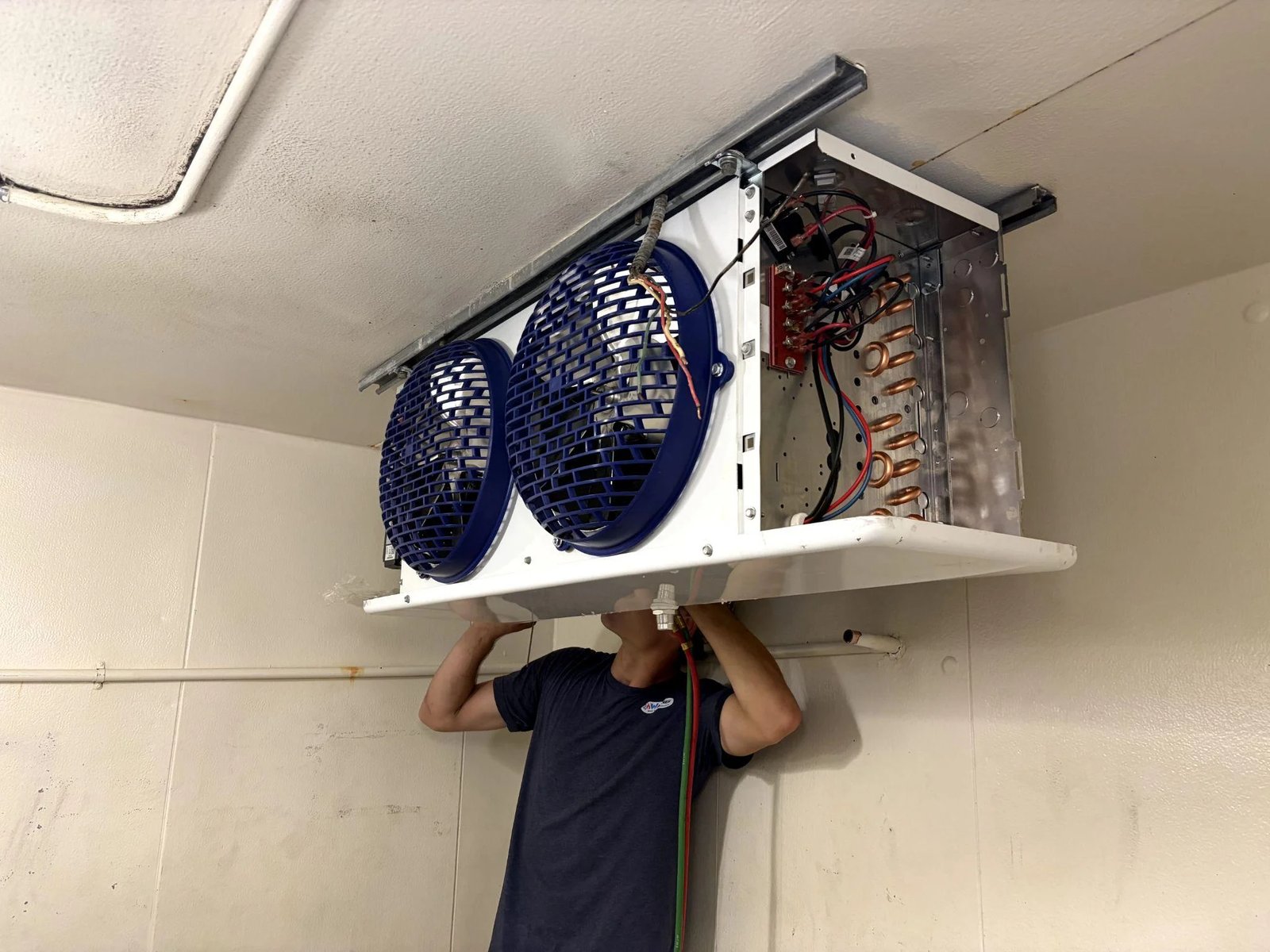
Not every house needs the same equipment:
- Central split systems suit most existing homes with ductwork already in good shape
- Heat pumps handle both heating and cooling and work well in a moderate climate like ours
- Ductless mini-splits fit room additions, older homes without ducts, or a single room that never matches the rest of the house
- Packaged units make sense when there is no room for a separate indoor unit
Sizing equipment for a rental or a small business works a little differently. Wagner’s commercial HVAC team handles that side of things separately.
For a straightforward single-family home with existing ductwork, a correctly sized central split system or heat pump usually solves the problem without the added cost of a specialty installation.
What a New System Really Costs in South Carolina
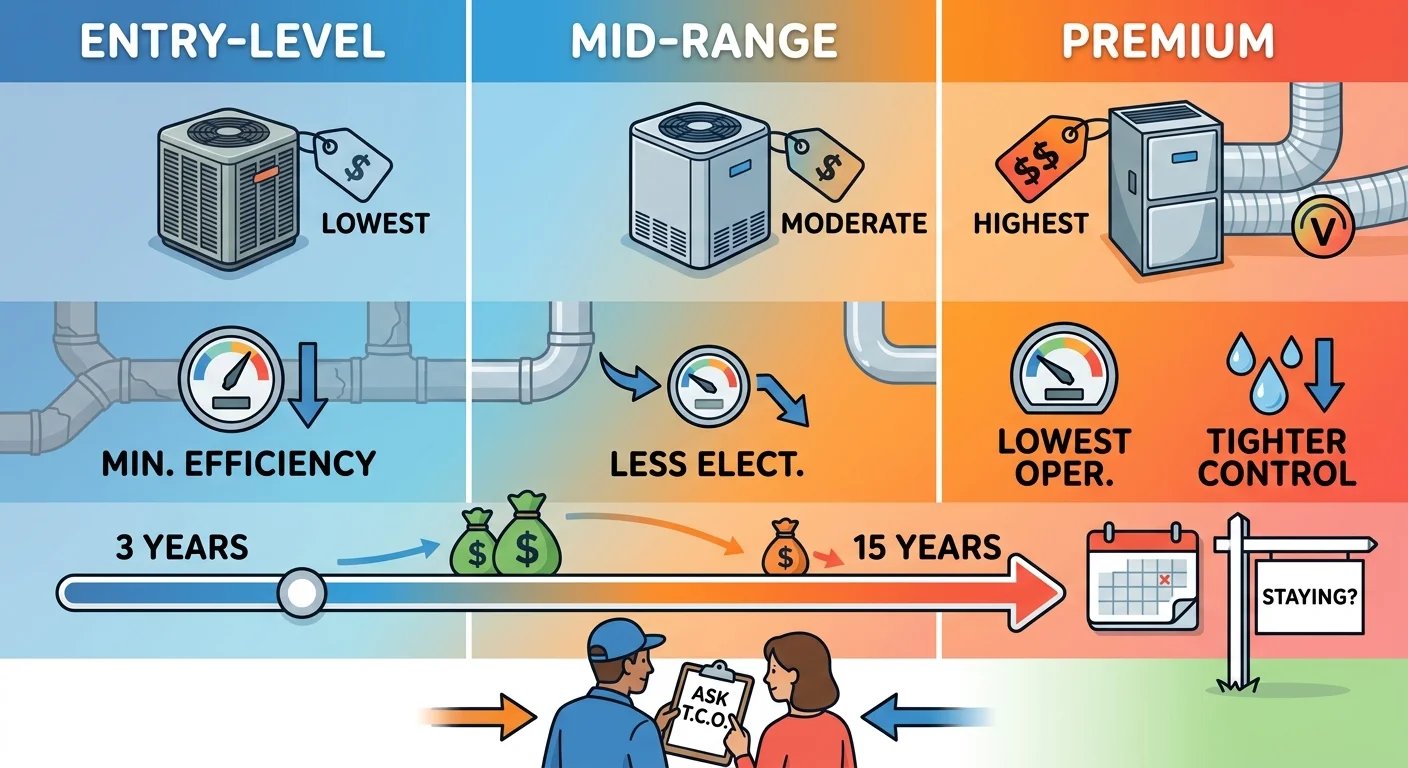
Total cost depends on more than the sticker price of the equipment. Installation labor, ductwork condition, and any electrical work needed all factor in, and so does what you will spend running the system for the next 15 years.
| Tier | Upfront Cost | Running Cost |
|---|---|---|
| Entry-level | Lowest | Meets the current efficiency minimum |
| Mid-range | Moderate | Uses less electricity every month it runs |
| Premium | Highest | Variable-speed operation and tighter humidity control, lowest cost to operate |
How long you plan to stay matters too. Selling in three years means less payback from a premium system than staying for fifteen. Ask any contractor for total cost of ownership, not just the installed price.
Red Flags That Mean You Should Get a Second Opinion

Experienced buyers learn to recognize the same handful of warning signs:
- No load calculation. A contractor who swaps in a same-size unit without running the numbers is guessing.
- An unusually low bid with no license number offered, often a sign of unlicensed labor or skipped permits.
- Same-day pressure to sign. A contractor confident in their price gives you time to compare it.
- No warranty terms in writing. Parts and labor coverage should be spelled out before anyone signs anything.
- A push toward the biggest unit available. Oversized equipment short-cycles, struggles with humidity, and wears out faster, not slower.
- A replacement recommendation with no explanation of what is actually wrong. Ask to see the failed part or the test results, not just be told it is time.
A fair contractor answers every one of these without hesitating. If one will not, call someone else.
The Tax Credit Situation for 2026 Buyers
Here is the part that trips people up: the federal tax credit covering 30 percent of a qualifying heat pump’s cost, up to $2,000, applied only to systems installed on or before December 31, 2025, according to ENERGY STAR’s federal tax credit page. For a system installed in 2026, that specific federal credit is no longer available.
That does not mean there is nothing to check. Utility rebates and state-level programs change often and vary by provider, so ask your contractor what is currently active rather than assuming a number from an older article still applies to yours.
What To Know About Getting A New HVAC Unit
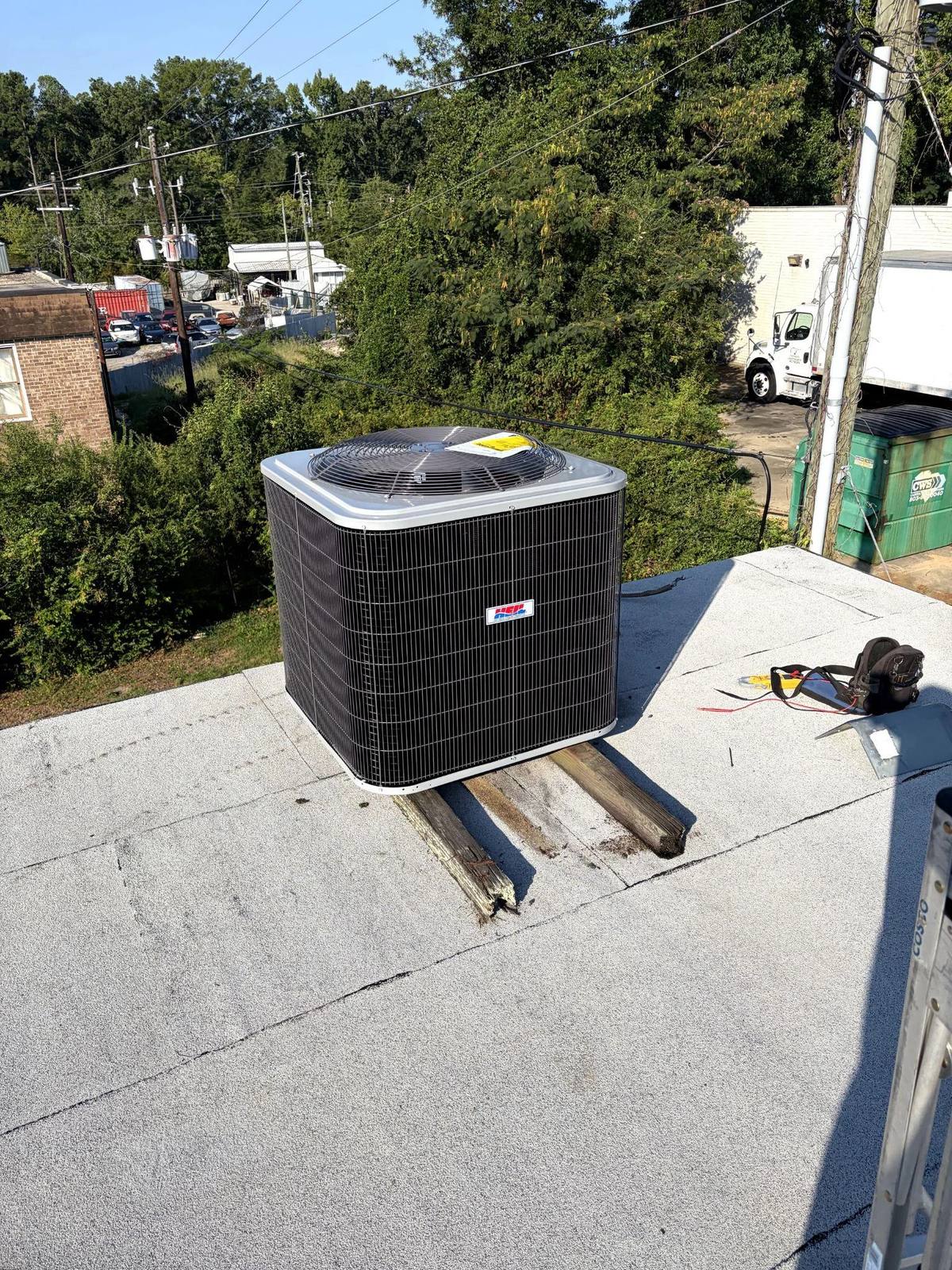
A popular HVAC community on Reddit ran a long thread from a homeowner whose technician said the compressor was “on its way out” during a routine visit, with no real proof offered. The advice in the replies holds up well.
On the Compressor Diagnosis
A dying compressor should be provable, not just claimed. Ask what test was run and what the numbers showed, not just a gut feeling from someone who also sells new systems. A dirty condenser coil, a weak capacitor, or a worn contactor can all mimic a failing compressor, and all three cost far less to fix.
On Financing
The thread’s consensus matched what we tell our own customers: get your own loan through a bank or credit union instead of a contractor’s in-house plan, since same-as-cash promotions often carry a built-in markup a straight loan avoids.
On System Longevity
More than one longtime technician in that thread said what we would say too: a well-maintained system can run 15 to 20 years or longer. One annual visit claiming your compressor is failing is not, by itself, a reason to replace a system that still works fine.
What Homeowners Say About Wagner HVAC and Refrigeration
A few things back up the no-pressure claim:
- A 5.0-star rating across 15 verified reviews on Angi, with a consistent pattern: homeowners getting a straight answer before being told to replace anything.
- Owner Joe Wagner spent most of his 23 years in the trade working on equipment through South Florida’s brutal year-round cooling season before relocating to South Carolina. Read his full background on the about page.
- Licensed under SC Mechanical Contractor License #CLM.118927, with no sales quota structure, meaning a technician has no financial incentive to recommend a system you do not need.
Get Your Free HVAC Assessment From Wagner HVAC and Refrigeration
Buying a new HVAC system does not have to feel like a guessing game. Start with the quick repair-or-replace test, insist on a written load calculation, compare efficiency ratings and total cost across at least three quotes, and watch for the red flags above before you sign anything.
Wagner HVAC & Refrigeration serves Chapin, Columbia, Lexington, Irmo, and the rest of the Midlands out of our Chapin office. Request an estimate or call (803) 575-2919 for an honest assessment of your current system and a straight answer about whether it needs replacing at all.
FAQs About Buying a New HVAC System
A few quick answers to what homeowners ask most before buying.
How long does buying and installing a new HVAC system take?
Expect one to two weeks from signed quote to install for common system types, longer if equipment is backordered or ductwork needs rework.
Can I keep my old indoor unit and just replace the outdoor unit?
Manufacturers design systems to be matched. Mixing an old indoor coil with a new outdoor unit usually voids the warranty and can hurt efficiency.
Do I need a permit to replace an HVAC system in South Carolina?
Most replacements require a mechanical permit pulled by a licensed contractor. Skipping it can cause problems when you sell the home.
FAQs About Wagner HVAC and Refrigeration
Does Wagner charge for an estimate?
No, initial assessments and estimates are free.
What areas does Wagner serve?
Chapin, Columbia, Lexington, Irmo, Ballentine, and the rest of the Midlands of South Carolina.