
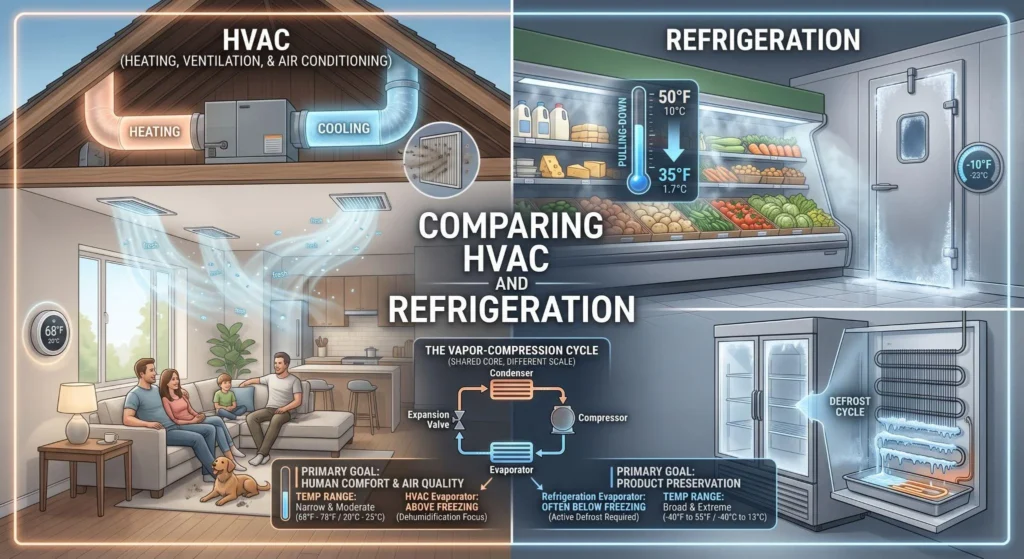
HVAC keeps people comfortable and refrigeration keeps products cold enough to sell or serve, which is the whole difference between HVAC and refrigeration. The two get mixed up constantly because they run on the same vapor-compression cycle, but they work at very different temperatures and need very different service.
Ask anyone who has spent a morning on a residential HVAC repair and an afternoon on a walk-in cooler that quit overnight. Same physics, completely different day.
Same Physics, Two Completely Different Missions
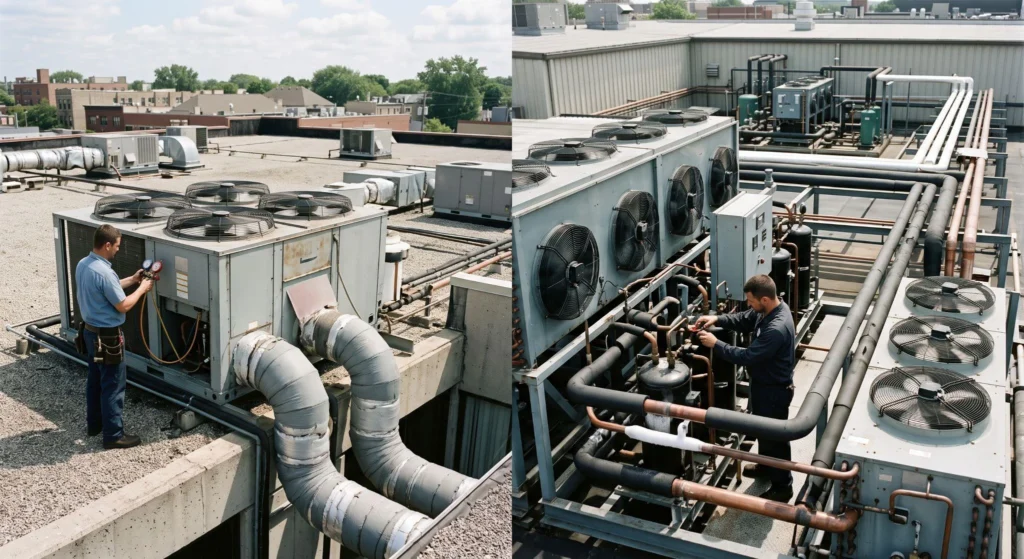
Compressor, condenser, evaporator, metering device. Both systems use all four to pull heat out of one space and dump it somewhere else. That shared foundation is where the confusion starts.
The split is in what each system protects:
- HVAC protects people. Comfort, air quality, and humidity in a space someone occupies.
- Refrigeration protects product. Food and inventory that spoils above a set temperature.
What an HVAC System Actually Controls
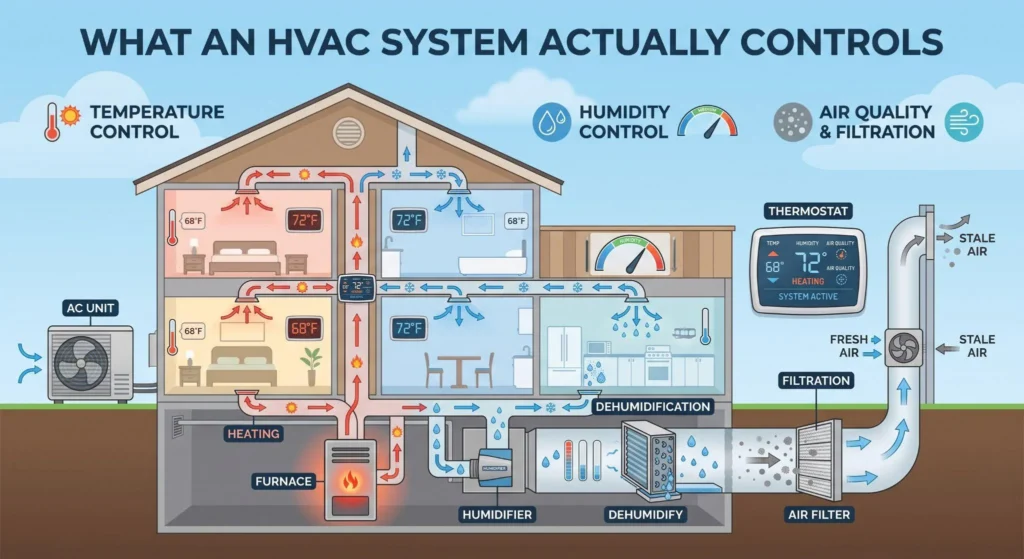
HVAC handles temperature, humidity, and air movement where people spend time. Most systems hold a narrow band, roughly 68 to 78°F, and push conditioned air through ductwork.
Typical equipment:
- Air conditioners and heat pumps
- Furnaces and air handlers
- Ductwork, returns, and registers
- Thermostats and zoning controls
Air quality matters as much as the number on the thermostat. A house sitting at 72°F with 65% indoor humidity still feels wrong, a familiar complaint around Lake Murray in July.
What a Commercial Refrigeration System Actually Controls
Refrigeration holds a specific cold temperature and does not drift. There is no comfort range to aim for, only a target that keeps product safe.
The Three Temperature Tiers
| Tier | Range | Typical Use |
| High temp | 45 to 55°F | Produce, floral, beverage |
| Medium temp | 32 to 40°F | Dairy, deli, packaged meat |
| Low temp | 0 to -20°F | Frozen goods, ice cream |
That precision is not optional. For food service operators, the FDA Food Code cold-holding limit of 41°F is what a health inspector measures against, so a cooler running at 45°F is a compliance problem before it is a mechanical one. Our commercial refrigeration repair and maintenance covers reach-in coolers, walk-in coolers and freezers, and ice machines for restaurants, retail, and property managers.
HVAC vs. Refrigeration: The Comparison That Matters
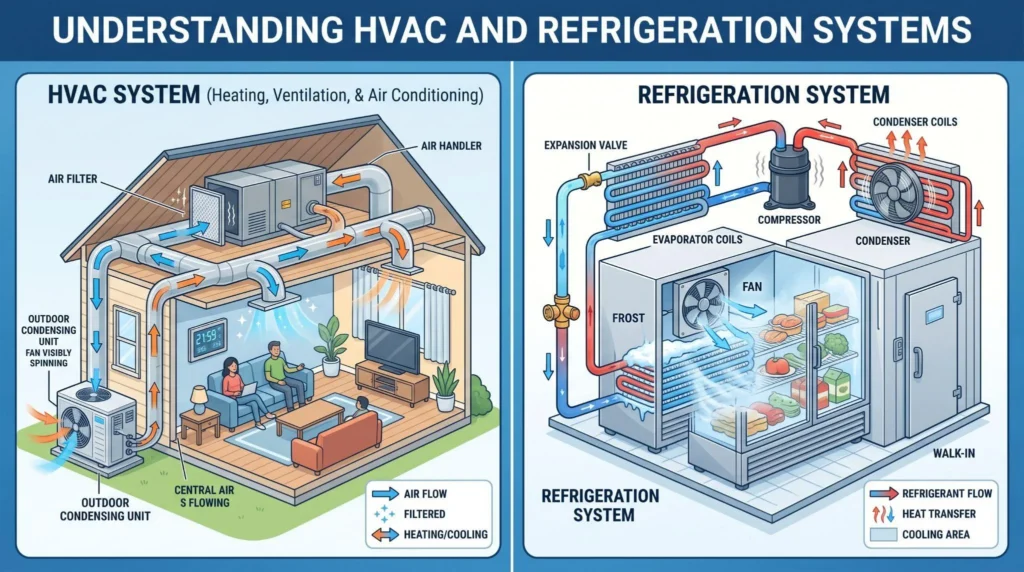
The key differences between HVAC and refrigeration show up fastest against the same criteria.
| Criteria | HVAC | Refrigeration |
| Protects | People | Product |
| Operating range | 68 to 78°F | -20 to 55°F by tier |
| Defrost cycle | Not required | Required on low temp |
| Common refrigerants | R-410A, R-32 | R-448A, R-404A, CO2 |
| Where it runs | Homes, offices, schools | Restaurants, groceries, warehouses |
| Failure cost | Discomfort | Lost inventory |
That last row is the one business owners feel. A warm office is annoying. A warm walk-in on a Friday night is a write-off.
Is Refrigeration Any Different From HVAC?
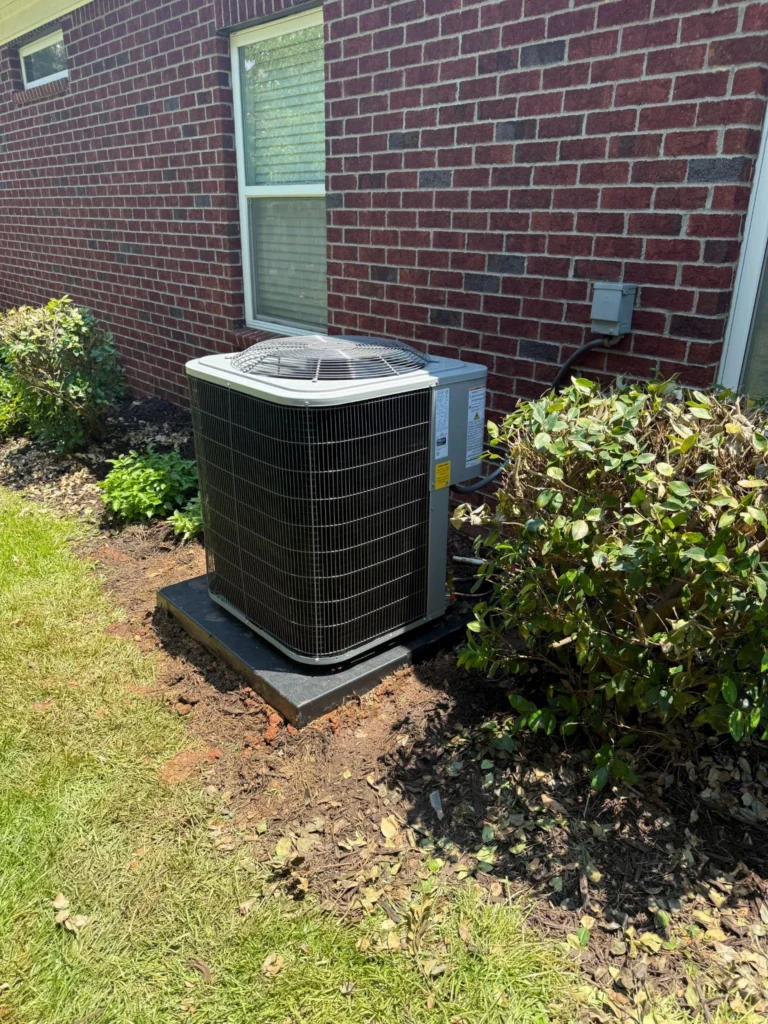
Yes, and the gap is wider than most people expect. Techs crossing over from HVAC find the parts familiar and the controls foreign.
- Controls get complicated. Defrost timers, hot gas valves, EPR valves, and headmasters that never appear on a home split system.
- Pressures are targets, not ranges. HVAC gives you room. Refrigeration gets dialed to a set point, because a few degrees of drift is spoiled stock.
- Defrost is mandatory. Coils below freezing ice up, and a failed defrost is one of the most common calls we take.
- The refrigerant list is longer. A refrigeration van carries R-448A, R-404A, R-290, and R-134a alongside the R-410A an HVAC truck runs on.
- Urgency is different. Nobody calls at 2 a.m. because an office is cold.
The practical takeaway: strong commercial HVAC service does not mean someone can diagnose an ice machine or rack system. Ask before you book.
How to Tell Which Service Call to Book
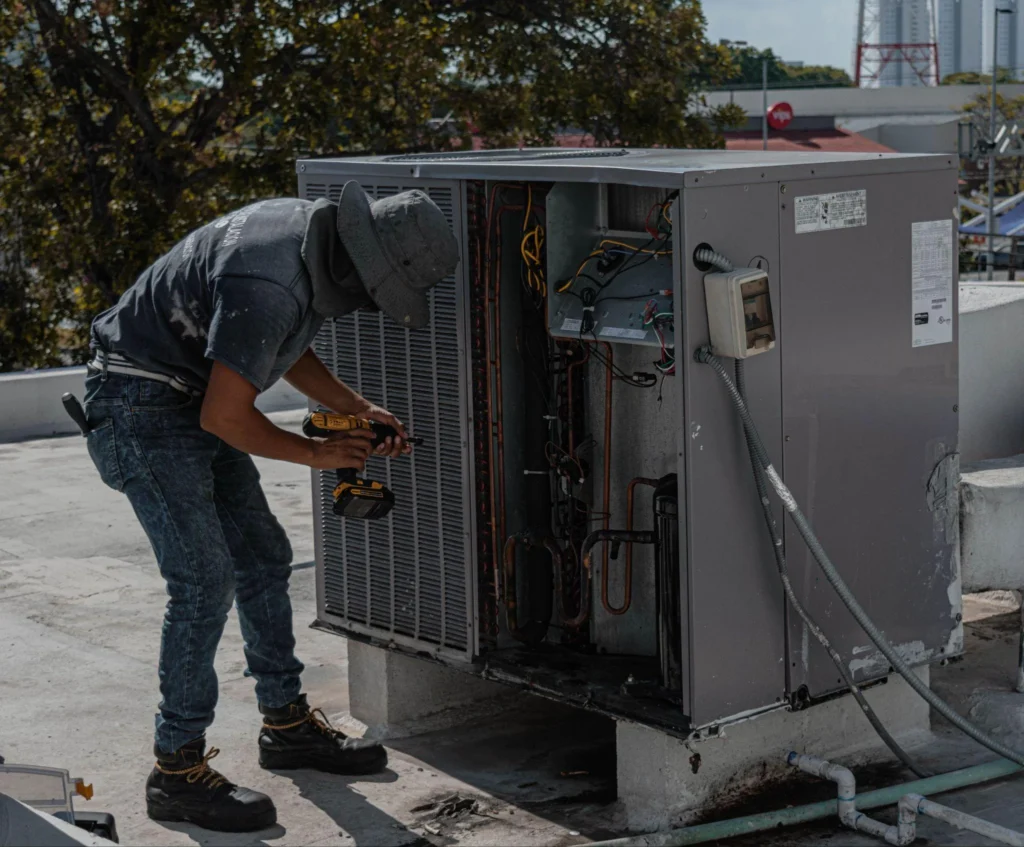
Run through this before you pick up the phone.
- People uncomfortable, air stale, or humidity high, book HVAC.
- Product warming, freezer drifting, or ice production stopped, book refrigeration.
- Restaurant, grocery, or convenience store, you need both, ideally from one contractor who is not guessing on either.
Wagner HVAC and Refrigeration covers residential and commercial HVAC across Chapin, Lake Murray, and the Columbia region, plus commercial refrigeration and ice machine work. Scheduled preventive maintenance plans catch drifting temperatures and weak defrost cycles before they become emergencies.
Not sure which one you have? That is normal. Call (803) 575-2919 or email joe@wagnerhvacr.com, and we will tell you straight.
FAQs About the Difference Between HVAC and Refrigeration
Is a household refrigerator an HVAC system?
No. It runs on refrigeration principles but preserves food rather than conditioning a space. Wagner services commercial refrigeration only.
Can an air conditioner cool a walk-in cooler?
No. Standard AC cannot hold walk-in temperatures and has no defrost capability, so the coil would freeze solid.
Does one contractor handle both?
Some do, many do not. Our full range of HVAC and refrigeration services covers both sides, which matters when the fault could sit on either.
FAQs About Wagner HVAC and Refrigeration
Do you service residential refrigerators?
No. Refrigeration and ice machine work is commercial only. For homeowners, we handle heating, cooling, and indoor air quality.
What areas do you cover?
Chapin, Irmo, Ballentine, Little Mountain, Lake Murray, and the greater Columbia region. Our listing as an HVAC contractor in Chapin is on Google Maps.
Who is behind the work?
Owner Joe Wagner, with 23 years across residential systems and commercial refrigeration.