Most people get HVAC certified in six months to two years. A trade school diploma runs six to twelve months, an associate degree takes about two years, and an apprenticeship stretches three to five years while paying you the whole time. No four-year degree required. But how long does it take to get HVAC certified in a way that gets you hired? Joe Wagner has 23 years in the trade, and the shop he built now handles residential heating and cooling repair across the Midlands. Here is what that timeline really looks like.
The Three Training Paths and How Long Each One Takes
Pick your path based on how soon you need to be earning and how much theory you want behind you before your first service call.
| Path | Time | What you walk away with |
|---|---|---|
| Trade school diploma | 6 to 12 months | Core skills and refrigerant exam prep, no electives |
| Associate degree | About 2 years | The same trade skills plus math, business, and lab hours |
| Apprenticeship | 3 to 5 years | Paid work under licensed techs, classroom hours alongside |
Federal data supports every one of these routes. The typical entry point is a postsecondary award rather than a degree. Median pay for the trade sits at $61,010 a year, and the Bureau of Labor Statistics projects 11 percent job growth over the coming decade, roughly triple the average across all occupations. Around 40,600 openings come up annually.
How Long Does It Take to Get HVAC Certified in South Carolina?
Here is the part most training pages skip. The answer shifts depending on which state you plan to work in, and South Carolina is simpler than most.
- EPA Section 608 is federal and mandatory. Anyone handling refrigerant needs it. It is a single exam rather than a full program, and schools usually build the prep into the curriculum. Budget a day or two for it.
- The state does not license individual technicians. South Carolina licenses contractors instead. That license belongs to the business, issued through the Contractor’s Licensing Board at the Department of Labor, Licensing and Regulation.
- So a tech’s timeline is training plus one exam. Six months and a passed 608 test, and you can legally hold a wrench on a Midlands job site.
- The contractor license takes years. Documented supervisory experience, a trade exam, and a business and law exam. Wagner holds SC Mechanical Contractor License #CLM.118927, which covers commercial refrigeration equipment alongside HVAC.
HVAC 10-Week Certification vs. 1-Year-Long Technical School
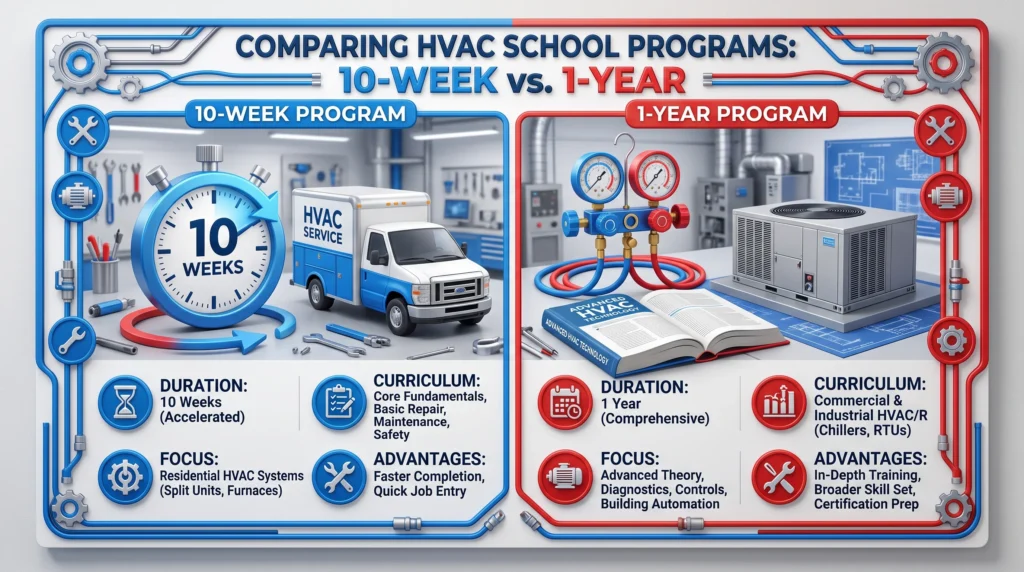
A ten-week course teaches the refrigeration cycle and sends you out the door. A year-long program teaches you why that cycle is misbehaving at 2 pm in August. The gap shows up fast around Lake Murray.
- Humidity is the local test. Midlands summers load a system with moisture on top of heat. Reading superheat and subcooling on a soaking afternoon is a skill built over months.
- Heat pumps run both directions. Most homes here heat through a reversing valve rather than a furnace. Short courses cover cooling well and rush the heating side.
- Commercial work asks for more. Rooftop units and walk-in freezers on business HVAC equipment sit well past a ten-week syllabus.
- Either way, you start as a helper. Ten weeks gets you in the truck sooner. A year gets you diagnosing sooner. Both beat neither.
If cost decides it, take the short course, then get hired somewhere running real scheduled maintenance visits. Repetition on live equipment closes the gap faster than tuition does, and it pays you while it happens.
Checking a Technician’s Credentials Before You Hire
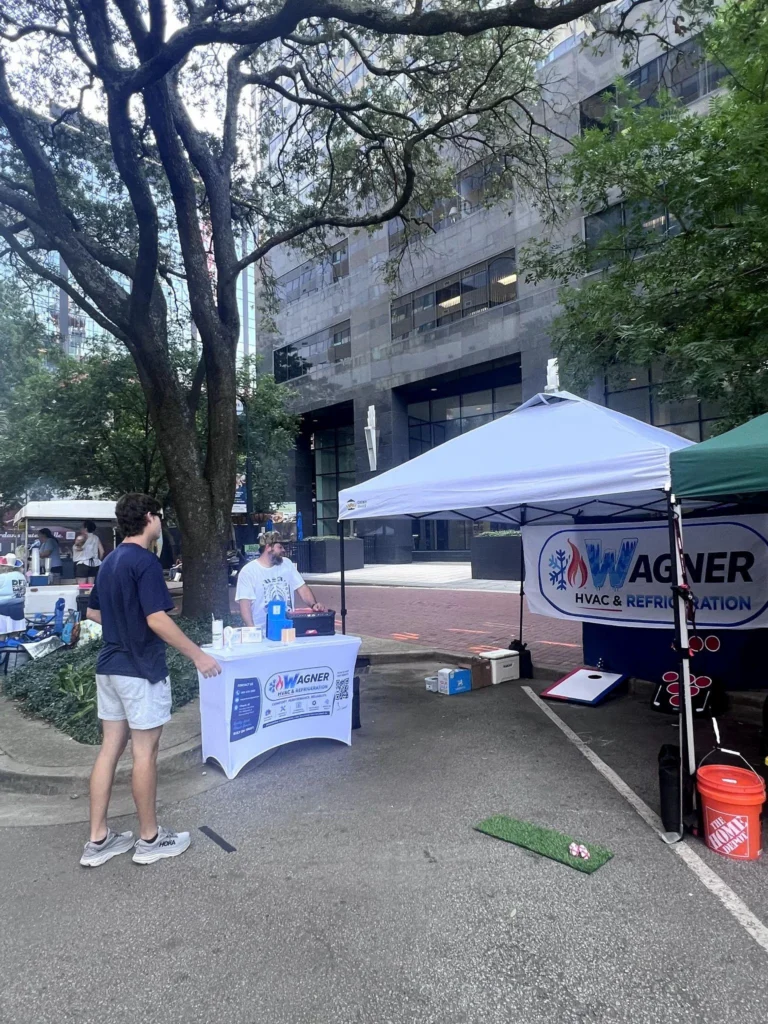
If you landed here as a homeowner rather than a future tech, the useful version is knowing what to ask. Request the contractor license number and look it up on the state board’s site, which takes a minute. Ask whether the tech carries a current 608 card. Then read the reviews. Wagner HVAC and Refrigeration holds a 5.0 rating across 15 verified Angi reviews, and who actually runs the company is on the record rather than implied. Call our Chapin HVAC contractor service office at (803) 575-2919 for a free estimate on repair, replacement, or a maintenance plan.