
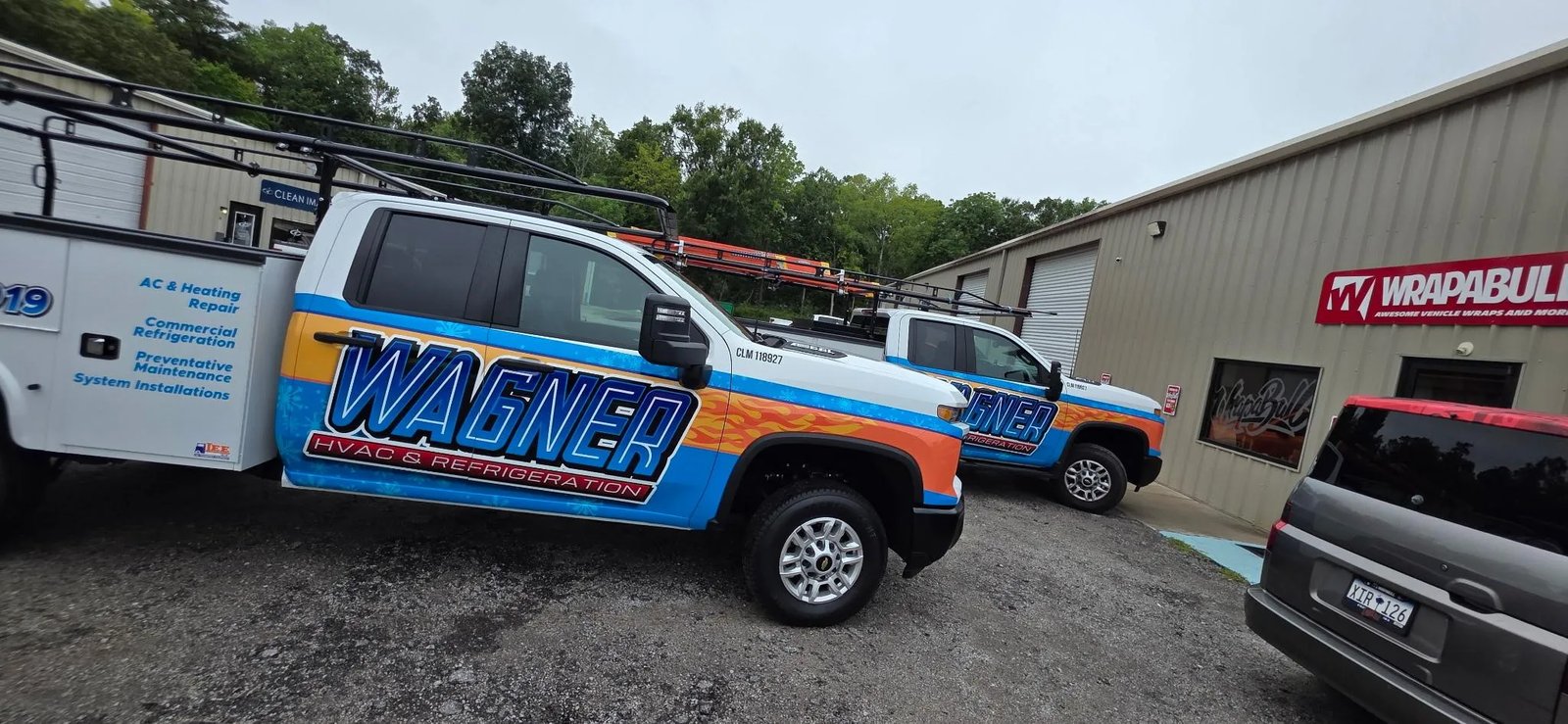
Getting into HVAC in South Carolina starts with an EPA 608 refrigerant card and a helper job at a local shop, not a four-year degree or a pile of debt. If you’re wondering how to get into HVAC without either one, a local HVAC and refrigeration contractor in the Midlands can hire and train you while you learn the trade on the job. This guide covers the training paths, the union option, and what the job search actually looks like for a beginner in South Carolina.
How to Get Into HVAC with No Experience in South Carolina
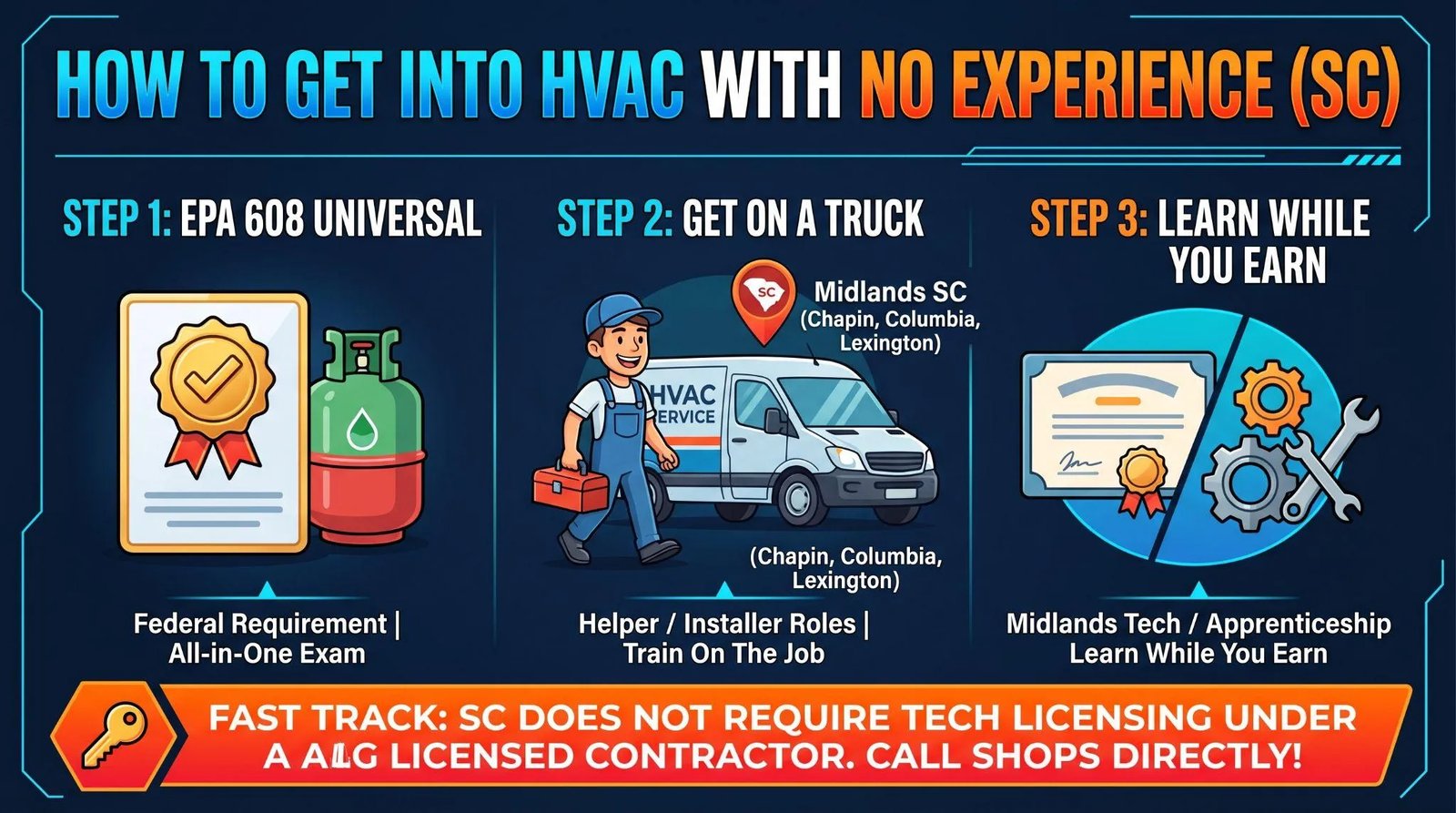
Most people assume they need a diploma before anyone in this trade will talk to them. That isn’t how most Midlands shops actually hire. Here’s the order that gets beginners working the fastest:
- Get your EPA 608 certification. Federal law requires it before you can buy or handle refrigerant. The Universal track covers Core, Type I, Type II, and Type III in one test, so it works for both home systems and commercial equipment. Study guides cost under fifty dollars, and the exam is multiple choice.
- Apply directly for helper and installer assistant roles. Residential and commercial shops across Chapin, Columbia, and Lexington regularly hire people with zero field experience and train them on the truck. Show up with your 608 card, a reliable vehicle, and a willingness to carry equipment and ask questions.
- Pick trade school or an apprenticeship once you’re already working. Both pair well with a helper job. Neither one is required to land your first interview.
South Carolina doesn’t require a separate state license for techs working under a licensed contractor, so your fastest route in is almost always a phone call to a shop, not an enrollment form. If you’d rather start with classroom basics first, Midlands Technical College in West Columbia runs an HVACR certificate program built for exactly this situation.
Training Paths: Trade School, Apprenticeship, or the Union
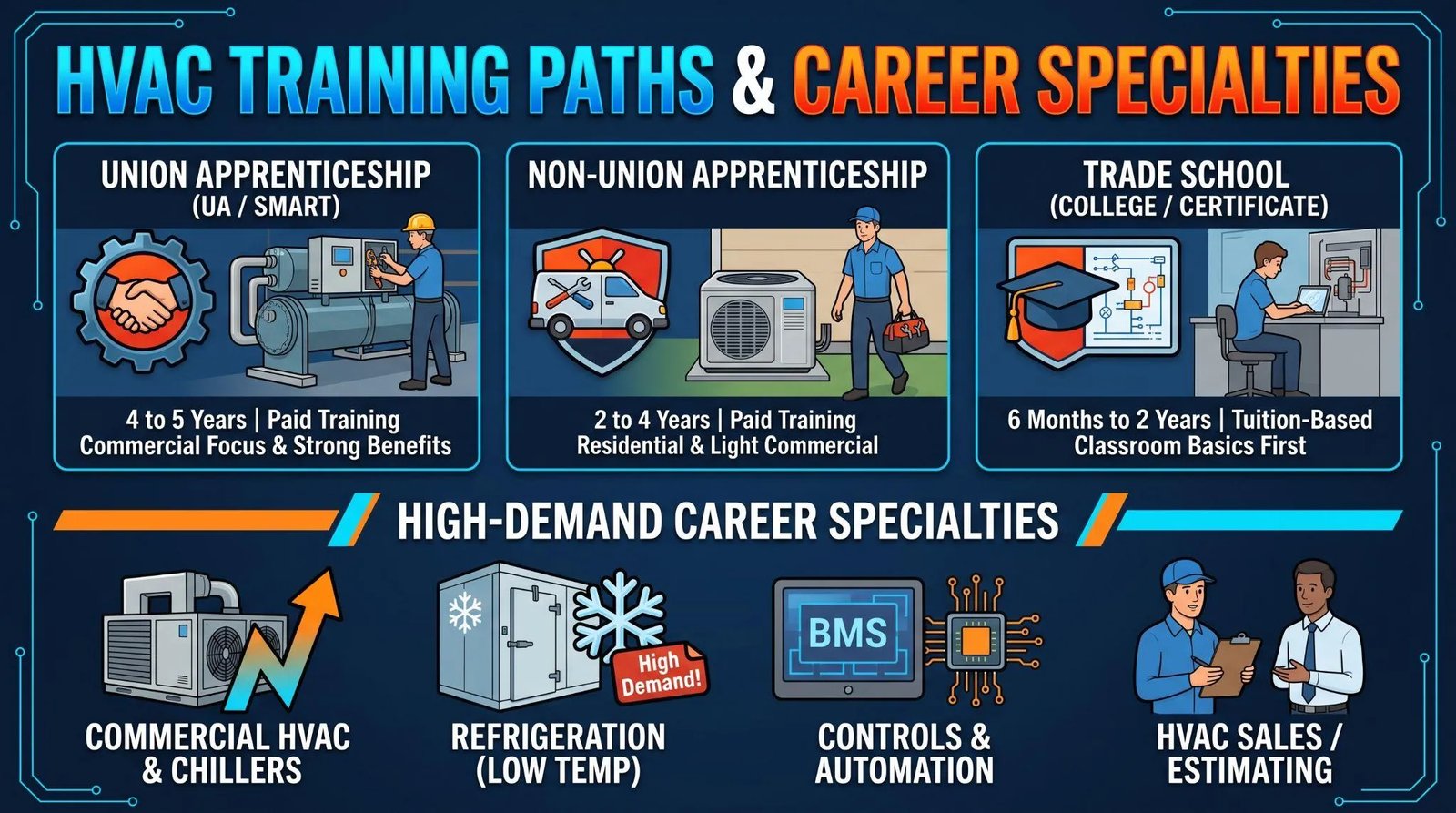
Here’s how the three main paths compare on time, pay, and fit:
| Path | Length | Pay While Training | Best For |
|---|---|---|---|
| Union apprenticeship (UA or SMART local) | 4 to 5 years | Yes | Commercial-heavy careers, long-term benefits |
| Non-union apprenticeship with a contractor | 2 to 4 years | Yes | Residential and light commercial, faster entry |
| Trade school (Midlands Technical College and similar) | 6 months to 2 years | No, tuition based | Classroom fundamentals before you apply |
Once you’ve got a season or two of field hours, a few specialties open up. Commercial HVAC equipment like rooftop units and chillers pays more than straight residential service and builds on the electrical skills you pick up early. Working on commercial refrigeration equipment, walk-in coolers, reach-in units, and ice machines is its own specialty, and fewer technicians chase it, which keeps demand high. HVAC controls is a smaller niche for people with an IT or electrical background, and HVAC sales rewards techs who already know the equipment well enough to talk through it with a facility manager.
I Want to Get Into an HVAC Career but Don’t Know Where to Start
Working techs get asked a version of this question constantly, and the advice usually splits into two camps. One side says skip school and get hired by a shop willing to train you. The other says six months of classroom basics keeps you from looking lost on your first service call. Both are right, depending on what’s actually open near you.
If a company in Chapin, Columbia, or Lexington will hire you as a helper this month, take it. You’ll learn faster soldering copper and pulling wire on a real truck than reading about it in a textbook. If nobody local is hiring entry level right now, a short program at a technical college, or a free resource like HVAC School’s tech tips and podcast episodes, gives you enough vocabulary for an interview.
One thing almost every experienced tech agrees on: start in commercial work if you can. Offices and restaurants call less often after hours than homeowners do, and the pay tends to be better once you’re past your first year.
Why South Carolina Needs More HVAC Technicians Right Now
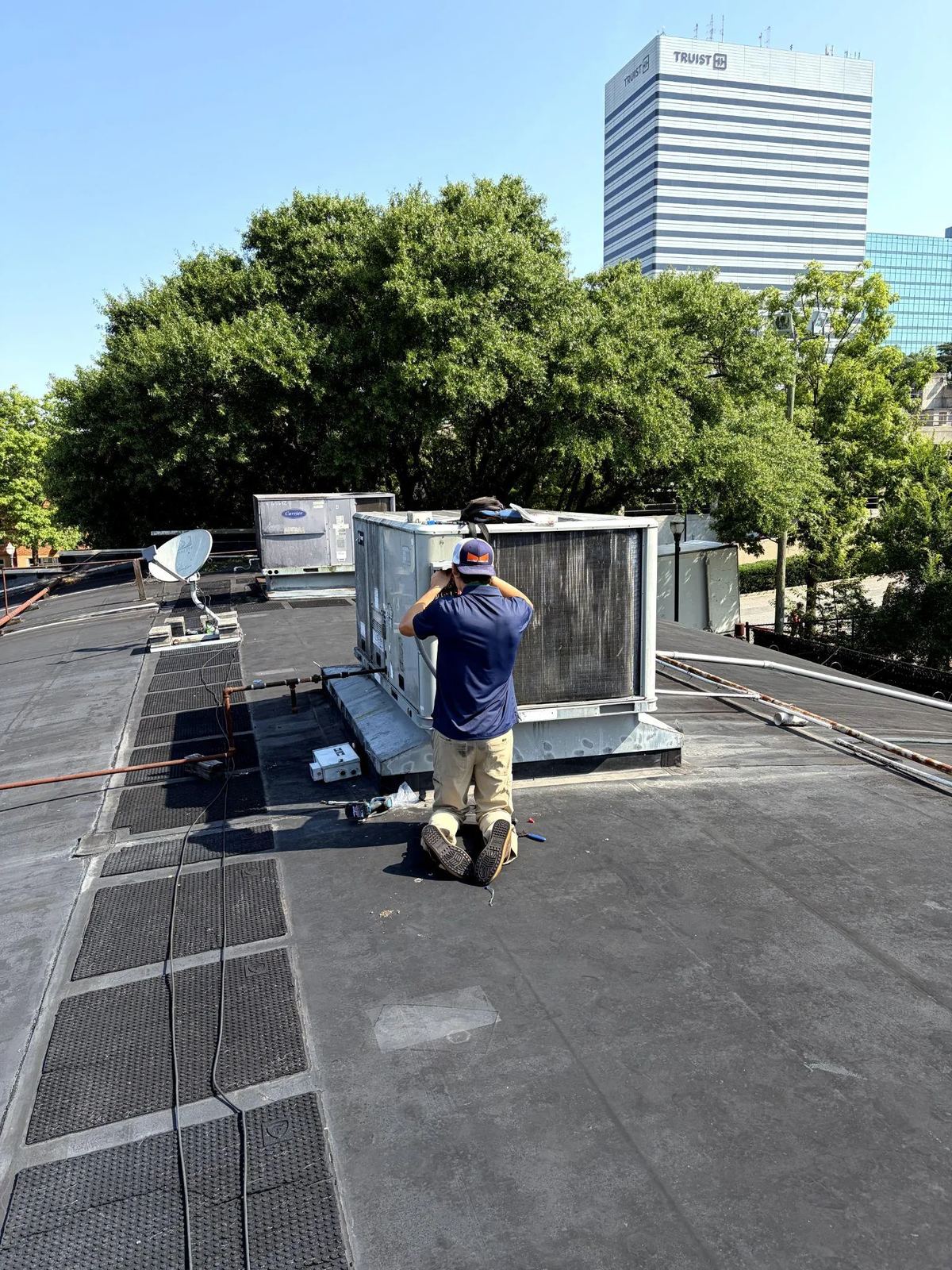
Nationally, employment for HVAC and refrigeration mechanics is projected to grow 11 percent through 2035, much faster than the average occupation, with a median wage above $60,000 per year. South Carolina adds extra pressure on top of that. Columbia sees around 47 days a year above 90 degrees, per National Weather Service climate data, which means local air conditioners run longer and fail more often than systems in cooler states. Every failure needs a technician on a truck, not a webpage.
Wagner HVAC & Refrigeration feels that shortage directly. Between home comfort calls, restaurant walk-in cooler emergencies, and the preventive maintenance plans that keep both running, there’s more work across the Midlands than there are trained hands to do it. If you’re weighing whether this trade has real staying power in this state, the honest answer is that open positions outnumber qualified applicants right now, and that isn’t projected to change soon.
Start Your HVAC Career with Wagner HVAC & Refrigeration in Chapin
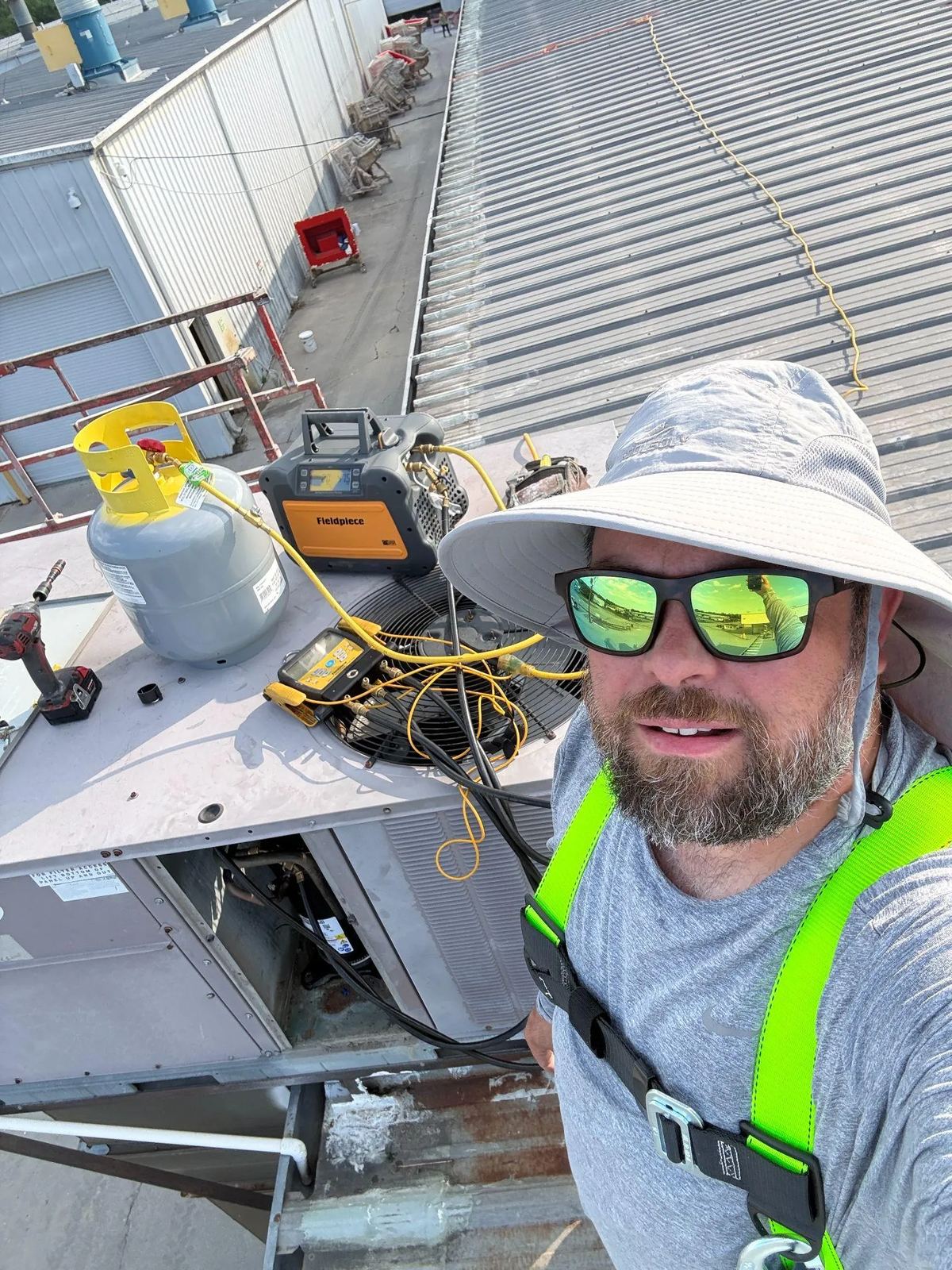
Joe Wagner spent most of his 23 years in this trade working restaurant kitchens and commercial refrigeration accounts in South Florida before moving his business to Chapin five years ago. That’s the kind of background a new technician can actually learn something from, not just a slogan painted on a truck. Wagner HVAC & Refrigeration LLC holds SC Mechanical Contractor License #CLM.118927, and its Angi profile shows a perfect average across fifteen reviews, built on the same no-pressure approach new hires are trained to use with every customer.
We’re currently looking for motivated helpers and experienced technicians who want to work across both home heating and cooling calls and commercial refrigeration, instead of getting boxed into one side of the trade. If that sounds like the kind of shop you want to learn in, call (803) 575-2919 or email Joe@wagnerhvacr.com. You can also look up our Chapin HVAC contractor office and read current reviews before you call.
FAQ about How to Get into HVAC
Here are quick, practical answers before you apply:
Do I need a diploma first?
No. A high school diploma or GED plus your EPA 608 card is enough to apply for most helper roles in the Midlands.
Is this trade too physical for a career change?
It’s hands-on work, but most new techs adjust within the first few months on a truck.
What should I expect to earn starting out?
Nationally, the lowest ten percent of HVAC technicians earn around $40,050 a year according to the Bureau of Labor Statistics, and that’s roughly where a true beginner lands before certifications and field hours push pay higher.