
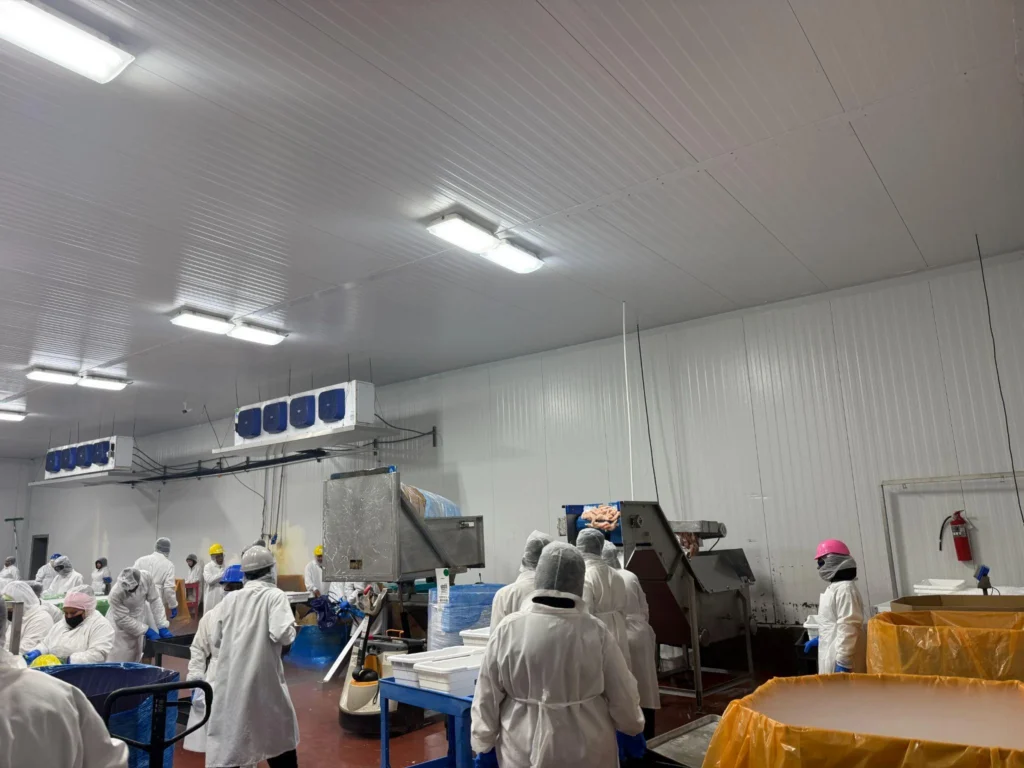
How long should a refrigerator last in a commercial kitchen? Most commercial refrigeration equipment runs 10 to 15 years, and walk-in units often reach 20 when they are maintained properly. The bigger factor is rarely the badge on the door. It is coil cleaning, gasket condition, and how hard Midlands heat makes the compressor work. Wagner HVAC and Refrigeration handles commercial refrigeration repair and installation for restaurants, groceries, and facilities across Chapin, Columbia, Lexington, and Irmo, and the numbers below come from what we actually see in the field.
How Long Commercial Refrigeration Equipment Actually Lasts
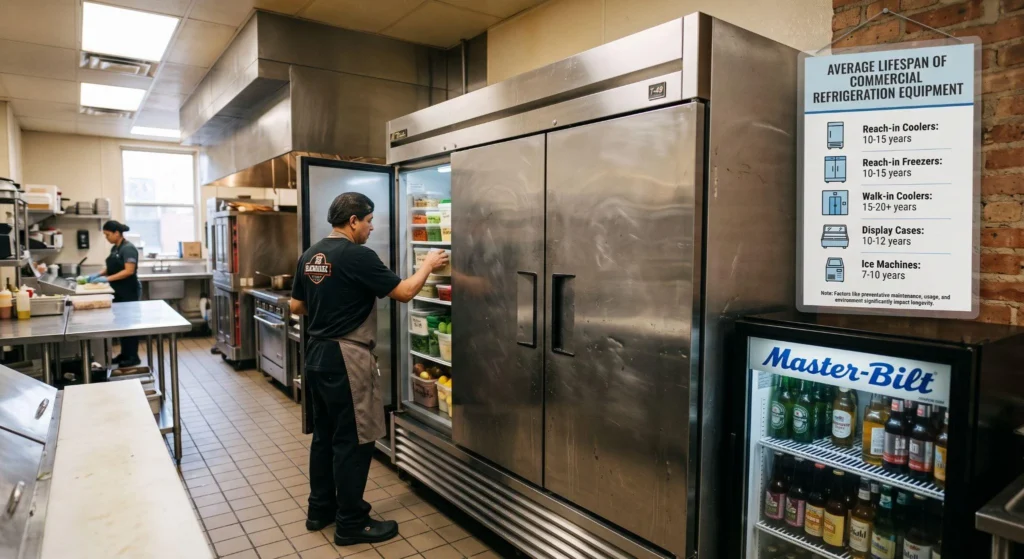
The honest answer on commercial refrigerator lifespan is 10 to 20 years, with most units landing in the 10 to 15 window. That spread is real, and it is not statistical noise.
Two numbers matter here, and they are not the same number. Manufacturers design around a service life. Operators experience an actual service life. Equipment that gets its coils cleaned and its gaskets replaced routinely tends to beat the design figure. Equipment that gets attention only when it stops holding temperature tends to fall short of it.
Commercial units also run far harder than anything in a house. A walk-in cooler behind a busy Chapin restaurant cycles all day, every day, through a South Carolina summer. That duty cycle is why maintenance stops being optional and starts being the thing that decides whether you get 11 years or 18.
Will Any Fridge Last Longer Than 5 Years?
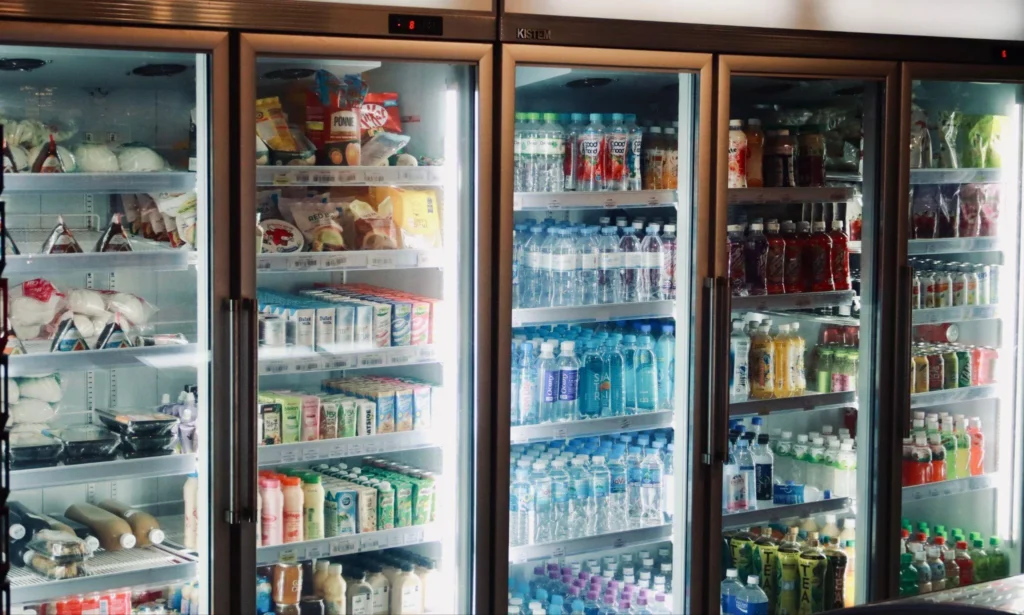
A salesperson telling a customer that five years is the ceiling is talking about cheap residential appliances, and even there the claim is thin. For commercial refrigeration, it is simply wrong. We service walk-in coolers in the Midlands that have been running since well before the businesses around them changed hands.
Here is what is true underneath that claim. Equipment has gotten more complex. More electronics, more sensors, more dispensing hardware means more parts that can fail. But complexity affects repair frequency, not the fundamental life of a well-built sealed system.
What actually separates a five-year unit from a fifteen-year unit:
- Duty cycle. A reach-in cooler opened 400 times a shift ages faster than one opened 40 times.
- Ambient heat. A condenser sitting next to a fryer works against itself all day.
- Service history. Coils cleaned twice a year versus never is the single widest gap in outcomes.
- Power quality. Repeated surges and brownouts are hard on compressors and control boards.
If your equipment is failing at five years, something on that list is the reason, and most of it is fixable.
Service Life by Equipment Type: Walk-Ins, Reach-Ins, and Ice Machines
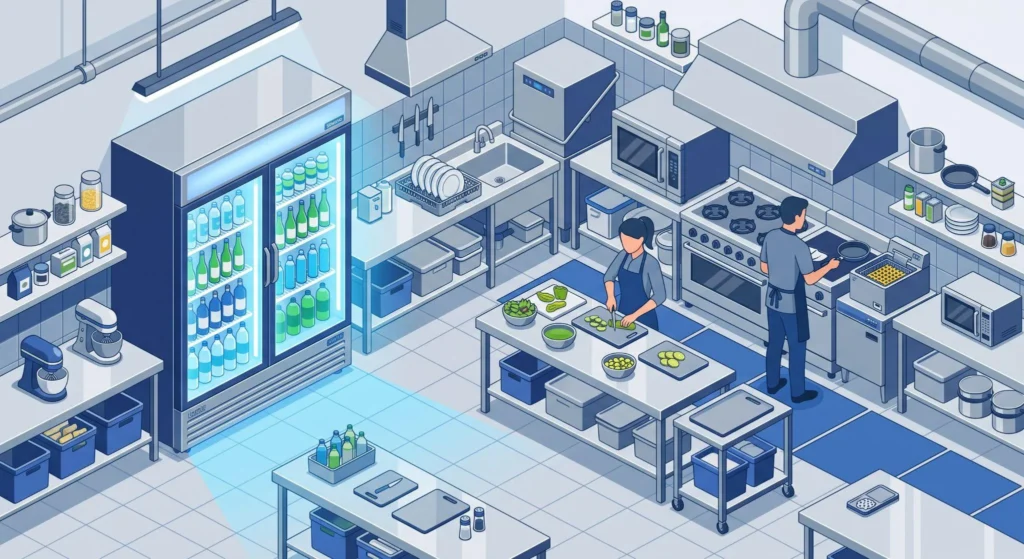
One rule explains most of it: the fewer parts a unit has, the longer it lasts. That single idea covers nearly all of the difference in refrigerator lifespan from one piece of equipment to the next.
| Equipment | Expect | What Usually Fails First |
| Walk-in cooler or freezer | 15 to 20 years | Door seals and hinges |
| Reach-in cooler or freezer | 10 to 15 years | Gaskets, from constant door use |
| Display case | 10 to 15 years | Fan motors, lights, glass doors |
| Commercial ice machine | 10 to 15 years | Scale buildup from water |
| Undercounter or prep table | 8 to 12 years | Airflow, plus heat from nearby cooking |
Three things to take from that table:
- Walk-ins win on simplicity. A big cabinet and a straightforward refrigeration circuit means there is not much to go wrong.
- Reach-ins lose years to their doors. Hundreds of openings a shift wear gaskets down and make the compressor cycle harder.
- Undercounter units are the ones getting squeezed. Wedged in beside a grill with no room to breathe, they run hot from day one.
Ice machines are their own case. Water quality decides their lifespan more than any mechanical part does, which is why regular commercial services matter more in hard-water areas than most operators expect.
Does the Brand on the Nameplate Decide Anything?
Brand matters less than operators assume. True, Traulsen, Hoshizaki, Turbo Air, Manitowoc, Beverage-Air, and Delfield all build equipment that lasts when it is looked after.
What actually predicts long service life:
- Parts availability in your region. A compressor you can source in two days beats one you wait three weeks for.
- Local service coverage. Equipment nobody nearby is trained on becomes disposable equipment.
- Warranty terms, especially whether labor is covered or only the part.
- Duty cycle rating matched to how you actually run the unit.
One pattern holds across every manufacturer: simpler units outlast feature-heavy ones from the same brand. A basic reach-in with minimal electronics will usually outlive a display case loaded with controls sitting right next to it.
Five Things That Quietly Shorten Equipment Life
Most equipment that dies early was not killed suddenly. It was worn down.
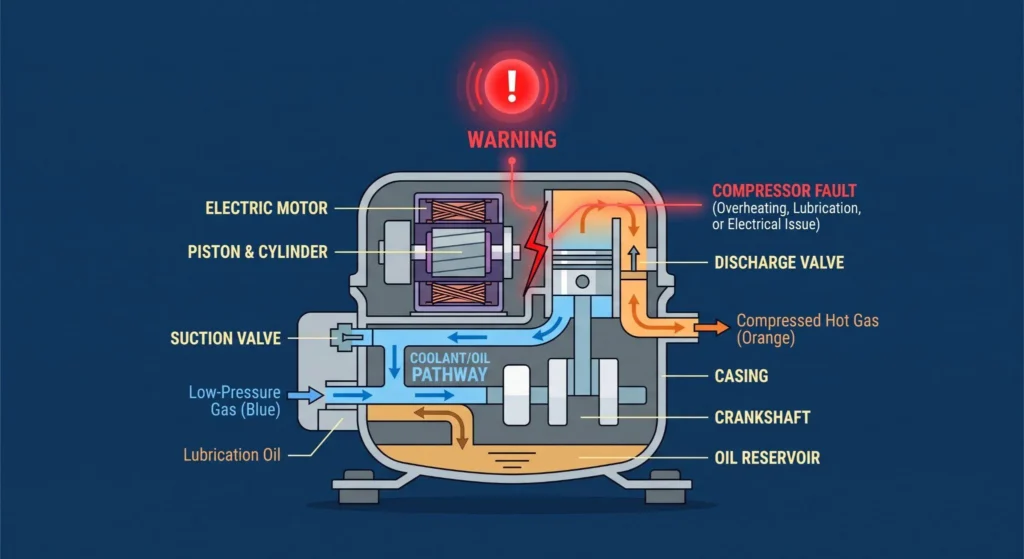
- Dirty condenser coils. This is the big one. Coils covered in dust and kitchen grease cannot shed heat, so the compressor runs longer and hotter. Researchers who tested fouled condenser coils on a small commercial refrigeration system found roadside dust cut the system’s coefficient of performance roughly in half and drove energy use up by as much as 20 percent.
- Worn door gaskets. A gasket that no longer seals lets warm air in continuously, and the compressor pays for it every hour of every day.
- Blocked airflow around the unit. Condensers need clearance. Cramming a unit against a wall or into a cabinet cavity guarantees heat problems.
- Overloading or underloading. Packed too tight, air cannot circulate. Nearly empty, there is no thermal mass to hold temperature between cycles.
- Ignoring early symptoms. A unit that runs constantly is already under stress. Running it another six months turns a gasket job into a compressor job.
Why Midlands Summers Make This Worse
Chapin, Columbia, and Lexington kitchens deal with high heat and high humidity for months at a stretch. A condenser already fighting a grease layer has no margin left on a 96 degree August afternoon. If the kitchen’s own cooling is struggling, ambient temperatures climb further, which is why we often pair a refrigeration call with a look at the building’s commercial HVAC system. The two loads are connected.
Warning Signs Your Equipment Is Near the End
Catching this early is the difference between a planned replacement and a Saturday morning emergency with a cooler full of product.
- The unit runs almost continuously or cycles far more often than it used to
- Temperatures drift, or one section of the box is noticeably warmer than another
- New sounds appear: clicking, rattling, grinding, or a compressor that is louder than last month
- Frost building up inside, or condensation forming on the outside
- The compressor housing is too hot to keep a hand on
- Gaskets are cracked, flattened, or pulling away from the door
- Energy costs climb with no other explanation
Two or more of these together is your signal to get a technician out before you lose inventory.
Repair or Replace: How to Run the Numbers
The 50 percent rule is the starting point. If a repair costs more than half of comparable replacement equipment, replacement usually wins.
Age changes the answer. A gasket replacement on a nine-year-old reach-in that otherwise runs clean is easy money. A compressor replacement on that same unit is a much harder call, because you are spending a large share of a new unit’s price to extend something already past its midpoint.
Work through these four questions:
- How old is the unit? Past 10 years, weigh everything more carefully.
- Is the repair core or peripheral? Sealed-system and compressor work is core. Gaskets, fan motors, and controls are peripheral.
- What does downtime cost you? Inventory loss and lost service hours belong in the calculation.
- What will a newer unit save on energy? Efficiency gains are real, though they rarely justify replacing a healthy unit on their own.
Compressor failures on units older than a decade are the clearest case for replacement. You are rebuilding the heart of a system whose other components are the same age.
Maintenance Steps That Add Years, Not Months
These are the things we watch operators skip, and the mechanical reason each one matters.
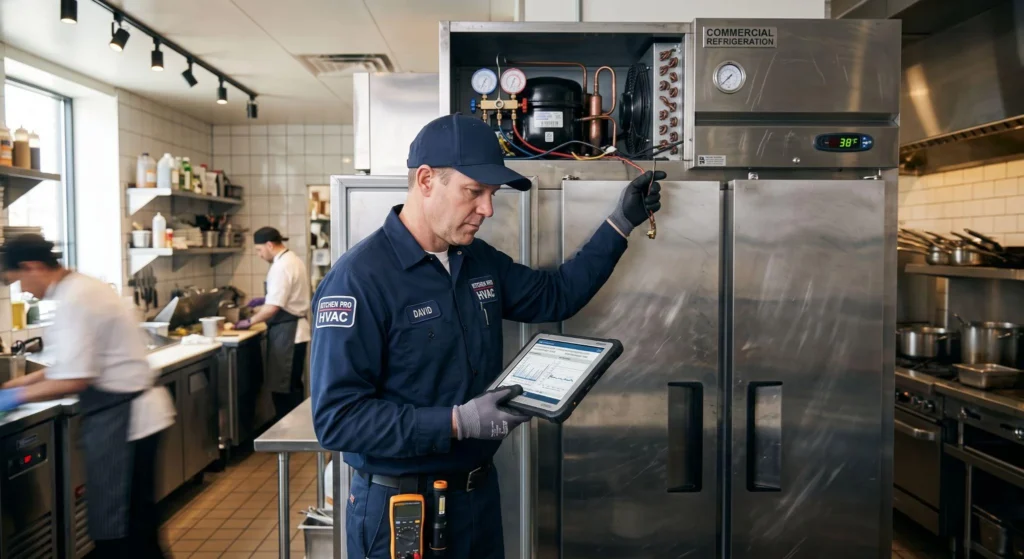
Clean condenser coils every six months. Make it quarterly in a greasy kitchen. On reach-ins and undercounter units the coil is usually at the bottom front or the rear. Walk-in condensing units are typically mounted outside or on the roof. This one step protects the compressor more than anything else on the list.
Check gaskets monthly. Run a hand along the full seal and look for cracks, flat spots, or sections pulling loose. Clean them with mild soap and water. Replace anything torn.
Verify temperatures with your own thermometer. Reach-in coolers should hold 35 to 38 degrees, walk-in coolers 35 to 40 depending on product, and freezers at 0 or below. Built-in displays drift.
Keep vents and clearances clear. Product stacked against interior vents blocks airflow. Boxes stacked around the condenser do the same thing outside.
Put it on a schedule instead of a memory. A preventive maintenance plan catches worn parts on a technician’s visit rather than on your worst morning of the month.
How long do commercial refrigerators last when someone actually does this? Operators who stay consistent regularly get past 15 years on equipment their neighbors replaced at 10.
What Midlands Business Owners Say About Working With Wagner
Wagner HVAC and Refrigeration holds a 5.0 rating from 15 verified customer reviews on Angi, along with Angi Approved status and a listing that reflects commercial service work.
One Midlands customer describes Wagner maintaining and installing their commercial refrigeration units alongside their household HVAC, and calls the crew a “very knowledgeable and experienced team.” Another describes a service call where other contractors had already quoted a full system replacement, and a correct diagnosis instead traced the fault to a miswired thermostat, which saved them thousands of dollars.
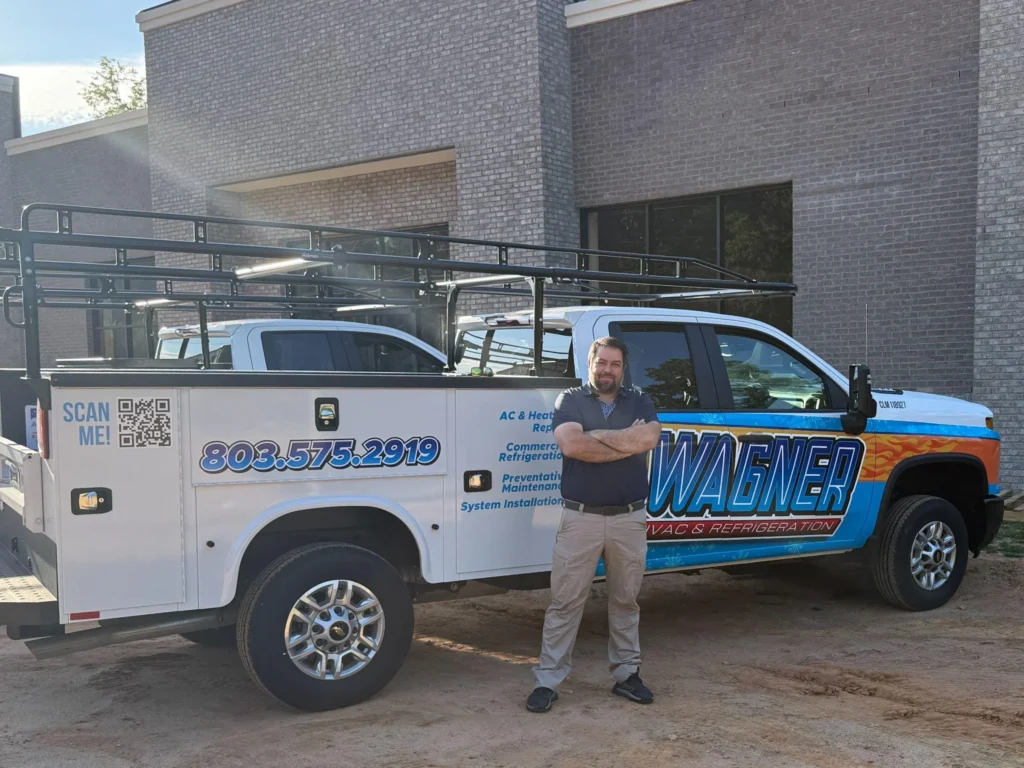
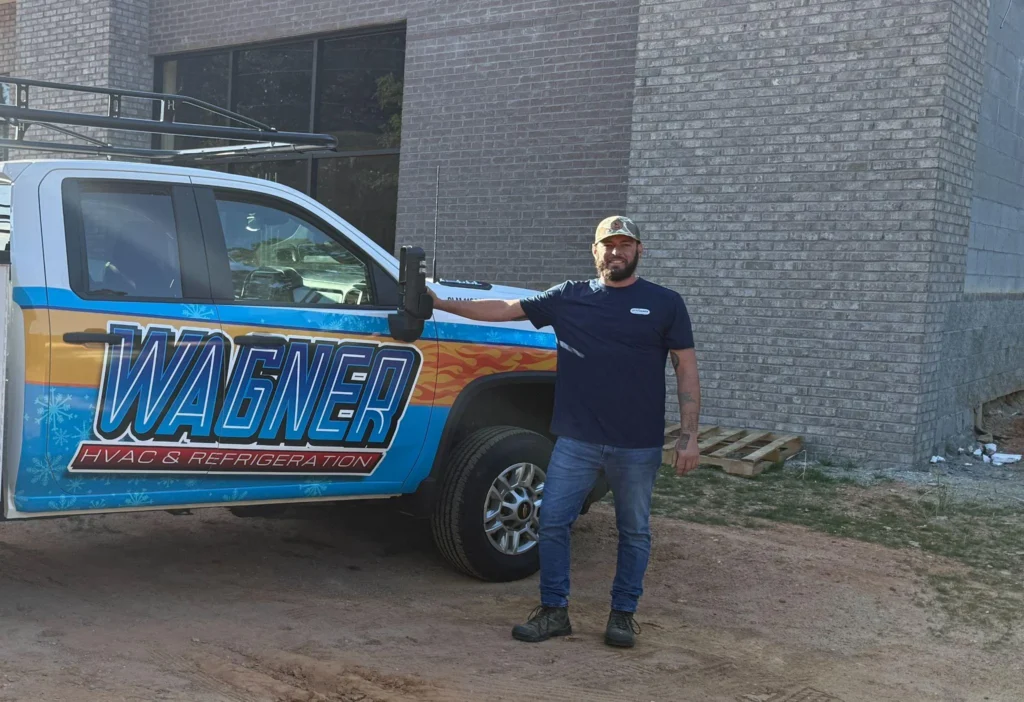
Owner Joe Wagner has 23 years in the trade, most of it in South Florida and the last five here in South Carolina. That South Florida stretch meant year-round cooling loads and heavy restaurant refrigeration work, which is directly relevant to how equipment behaves through a Midlands summer. Wagner HVAC and Refrigeration is licensed and insured under SC Mechanical Contractor License CLM.118927. You can find our Chapin service base at our HVAC contractor office.
Get a Straight Answer Before Your Next Breakdown
Service life comes down to equipment type, duty cycle, and maintenance history, in roughly that order of importance. Most commercial units give you 10 to 15 years, and looked-after equipment beats that regularly.
If a cooler, freezer, or ice machine is showing warning signs, or you are weighing a repair against a replacement and want an honest read on it, we will tell you what we find without pushing you toward the expensive option. Call (803) 575-2919, email Joe@wagnerhvacr.com, or request a refrigeration assessment for your Midlands business.
FAQs About “How Long Should a Refrigerator Last?”
Is it worth repairing a 10-year-old commercial cooler? It depends entirely on which part failed. Gaskets, fan motors, and controls are usually worth fixing. Sealed-system or compressor work on a unit that age rarely is.
Does location really affect service life? Yes, substantially. A unit next to a fryer or in a poorly ventilated corner runs hotter and dies sooner than the identical unit in an open, ventilated space.
How often should condenser coils be cleaned? Every six months as a baseline, quarterly in high-grease kitchens. This is the highest-return maintenance task available.
Which commercial refrigeration brands last longest? No single brand wins outright. Parts availability, local service coverage, and maintenance history predict lifespan better than the manufacturer name.
Can a commercial ice machine last 15 years? Yes, with consistent cleaning and attention to water quality. Scale buildup is what ends most ice machines early.
FAQs About Wagner HVAC and Refrigeration
Do you service residential refrigerators? No. Our refrigeration work is commercial only, covering reach-in coolers and freezers, walk-in coolers and freezers, display cases, and commercial ice machines.
Which areas do you cover? Chapin, Columbia, Lexington, Irmo, Ballentine, Little Mountain, Blythewood, West Columbia, Cayce, Forest Acres, and the surrounding Midlands.
Are you licensed? Yes, under SC Mechanical Contractor License CLM.118927, and we carry insurance.
Do you offer emergency refrigeration service? Yes. Refrigeration failures put inventory at risk within hours, so we prioritize those calls.