
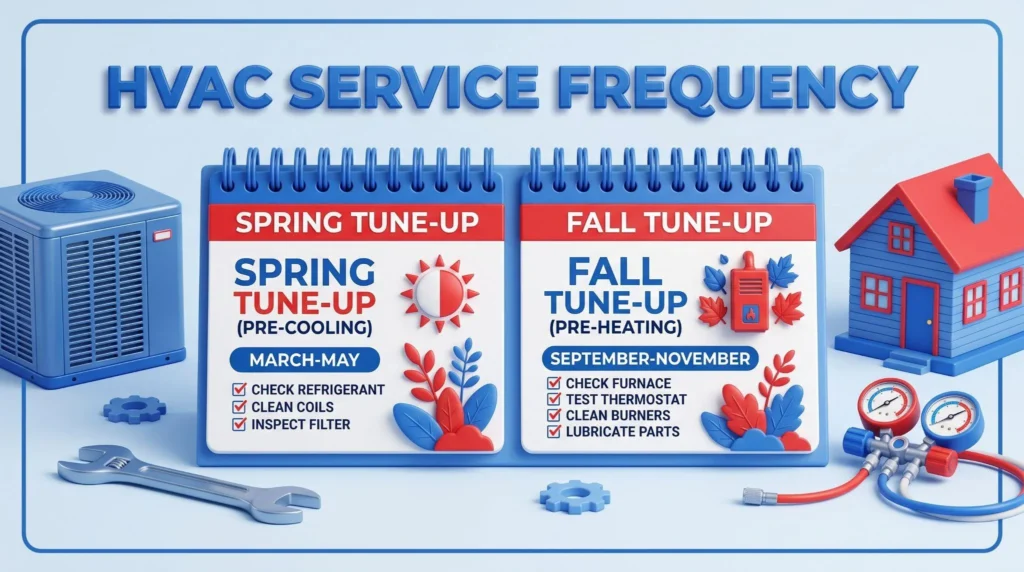
Most home HVAC systems need professional service twice a year, once in spring before cooling season and once in fall before heating season. Heat pumps need both visits without exception, since they run in both modes. The question “How often should HVAC be serviced?” beyond that baseline depends on equipment age, climate load, and household demand, and the residential HVAC systems we service around Chapin show the pattern clearly.
How Often Should HVAC Be Serviced by System Type
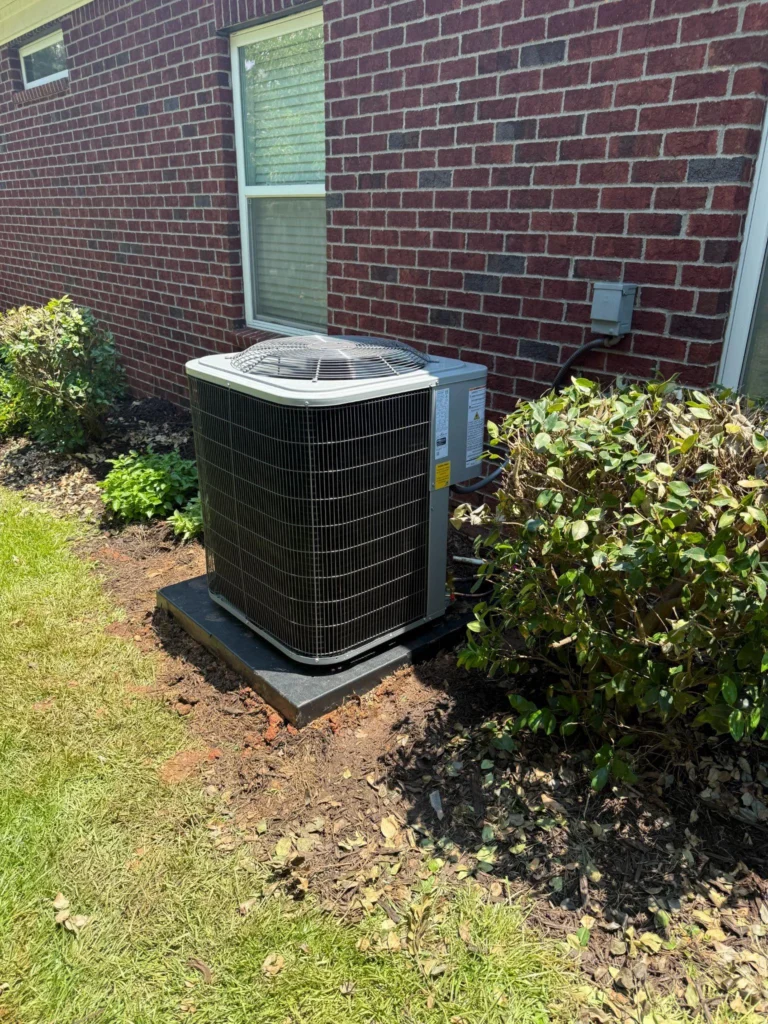
The baseline shifts depending on what sits outside your house.
| Equipment | Visits per year | Why |
|---|---|---|
| Gas furnace with central air | 2 | Each half rests about six months |
| Heat pump | 2 at minimum | One circuit heats and cools, so nothing rests |
| Ductless mini split | 2, plus monthly filter cleaning | Heads pull air across an exposed filter |
| Any system past ten years | 2, plus a midseason check | Wear shows up between visits |
Heat pumps deserve the extra note. A furnace and an air conditioner split the year, and each gets a rest. A heat pump reverses one circuit through both seasons, so a skipped visit shows up faster there than anywhere else.
Why the Midlands Climate Pushes That Schedule
Chapin, Irmo, Ballentine, and the Columbia area run long cooling seasons at high humidity, which changes what a service visit has to find.
Researchers at NIST measured seven common faults on a heat pump across five climate zones. Their fault sensitivity findings put improper setup at roughly 30 percent extra household heating and cooling energy, with leaky ducts the largest single offender.
The part that matters locally came out of the hot, humid zones. Duct leakage drives indoor humidity up, people drop the thermostat to compensate, and energy use climbs a second time. In a dry climate, a leaky duct costs you once. Here it costs you twice.
Three Things That Change Your Service Interval
Two visits is the starting point. These three decide whether your house needs more.
Equipment Age
Past ten years, parts that used to fail slowly start failing suddenly. Capacitors weaken, contactors pit, blower bearings dry out. A midseason check catches those while they are still a part swap.
Household Load
Pets, a full house, and running the fan continuously all load a filter faster than average. A filter that looks grey at six weeks instead of three months means the system is working harder than the schedule assumes.
Warranty Terms
Most manufacturers make documented maintenance a condition of the parts warranty. Skipping a year rarely breaks the system. It can break the coverage, and that matters most on the compressor, so keep every invoice.
What a Visit Should Catch, Not Just Check
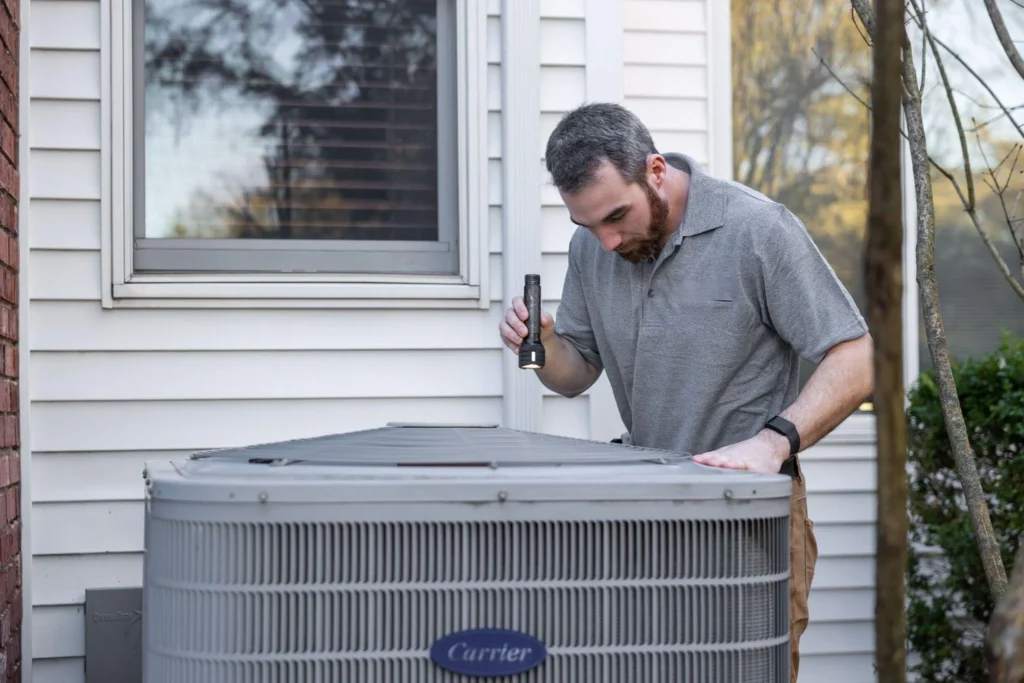
A tune-up earns its place only if it produces findings. Our breakdown of what an AC maintenance visit includes covers every step. Here is the short version of what a good one surfaces:
- A measured refrigerant charge, reported as a reading you can write down
- Duct and airflow condition, where Midlands systems lose the most
- Condensate drain flow, confirmed before July, not after the ceiling stains
- Capacitor and contactor readings, the parts behind most no cool calls
- Which components are healthy, not only the failing ones
If a visit ends without a single measured value, it was an inspection, not a tune-up.
Signs You Should Not Wait for the Next Visit
Systems announce trouble before they quit. Any of these earns a call, whatever the schedule says:
- Warm air at the vents while the outdoor unit is running
- A power bill climbing in weather comparable to last year
- Water near the air handler, or a stain on the ceiling below it
- Short cycling, where the system starts and stops every few minutes
- Grinding, screeching, or a hard click followed by a steady hum
- One room that never reaches the thermostat setting
The click and hum is the one to act on fastest. That usually points to a capacitor, an inexpensive part when it is caught early.
Do I Really Need Two Visits a Year or Is One Enough?
It depends on what you have, and it is worth being specific.
One visit works if you run a gas furnace with central air, the equipment is under ten years old, and you book it in spring. Cooling carries the heavier load here, so spring is the visit to keep.
One visit does not work on a heat pump. Same circuit, both seasons, no rest. Skip the fall check, and you find out about a failing reversing valve on the first cold night.
If cost is the reason you are asking, say so on the phone. Our scheduled maintenance plans bundle both visits, and one spring visit still beats none.
What Google Reviewers Say About Our Service Calls
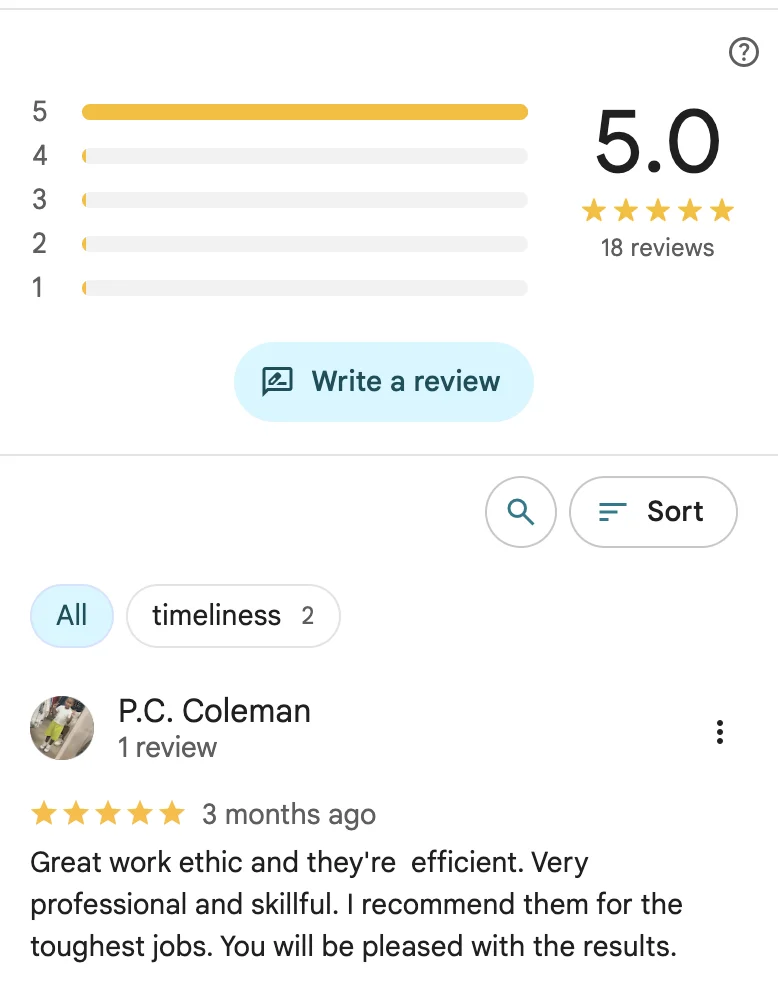
Wagner HVAC and Refrigeration holds a 5.0 average across 18 Google reviews of our Chapin HVAC work. The themes repeat: technicians who show up when they said they would, explain the diagnosis before touching anything, and leave the space clean.
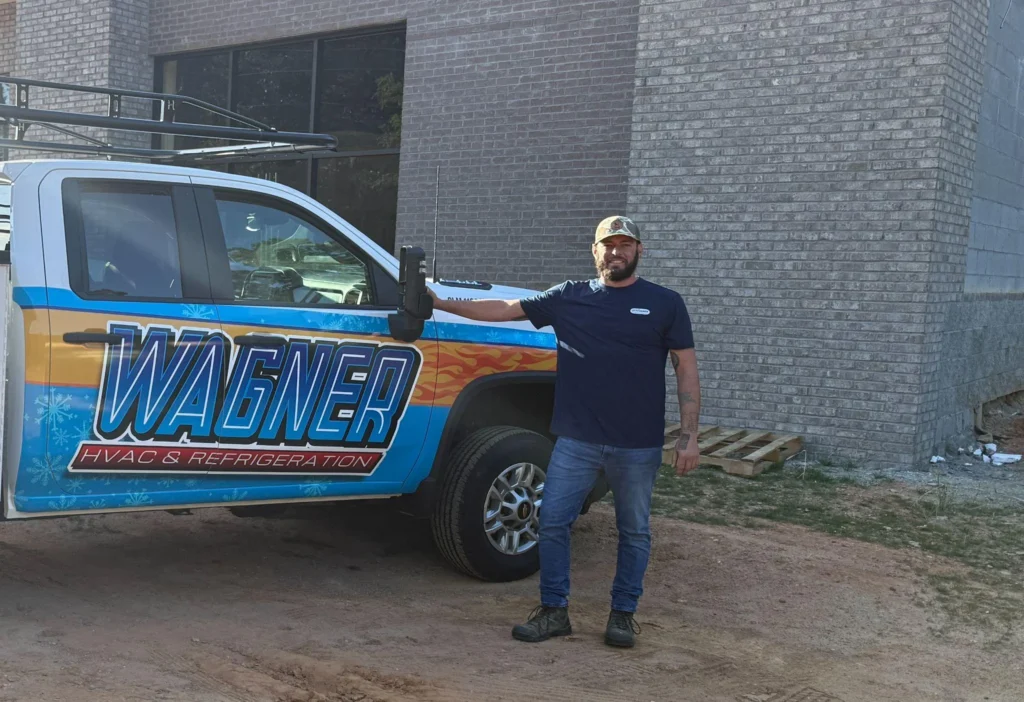
One homeowner gathered four bids before choosing us, and noted the quote came with no add-ons. Another wrote that the job was done within hours of the service call. Joe Wagner brings 23 years in the trade, most of it in South Florida and the last five here in South Carolina, and the story behind the company fills in the rest.
Book Your Spring and Fall Visits Before the Rush
Two visits a year, spring and fall, plus a midseason check if your system is past ten or your household runs it hard. That keeps Midlands equipment out of emergency territory.
The office runs Monday to Friday, 8:00 AM to 5:00 PM, with after-hours calls on request. Reach us at (803) 575-2919, or book a tune-up estimate. You will hear what your system actually needs, including nothing at all if that is the honest answer.
FAQs About HVAC Service Frequency
Can I handle any of this myself? Change filters, keep shrubs and debris clear of the outdoor unit, and watch the drain pan. Refrigerant, electrical, and combustion work needs a licensed technician, and Wagner holds SC Mechanical Contractor License CLM.118927.
Spring or fall, if I can only pick one? Spring. The cooling season here runs longer and harder on equipment than the heating season.