
Changing your air filter takes about ten minutes and needs no tools on most systems. Turn the system off at the thermostat, find the filter behind a return grille or inside the air handler, note the size and the arrow direction, slide the new one in with the arrow pointing toward the equipment, then switch the system back on. Here is how to replace HVAC filters properly, explained by the licensed Chapin home heating and cooling team that opens these cabinets every day.
What You Need Before You Start
Gather everything first and the job stays under ten minutes.
- A new filter in the correct size
- A flashlight, since most filter slots sit in a dark closet or attic
- A screwdriver, only if your access panel is held by screws
- A trash bag to seal the old filter the moment it comes out
- A dry cloth for the dust that settles inside the slot
One rule applies to every system: shut the unit off at the thermostat before you open anything. With the blower running and the slot open, the equipment pulls unfiltered air straight past the coil.
Where Is Your Air Filter Located?
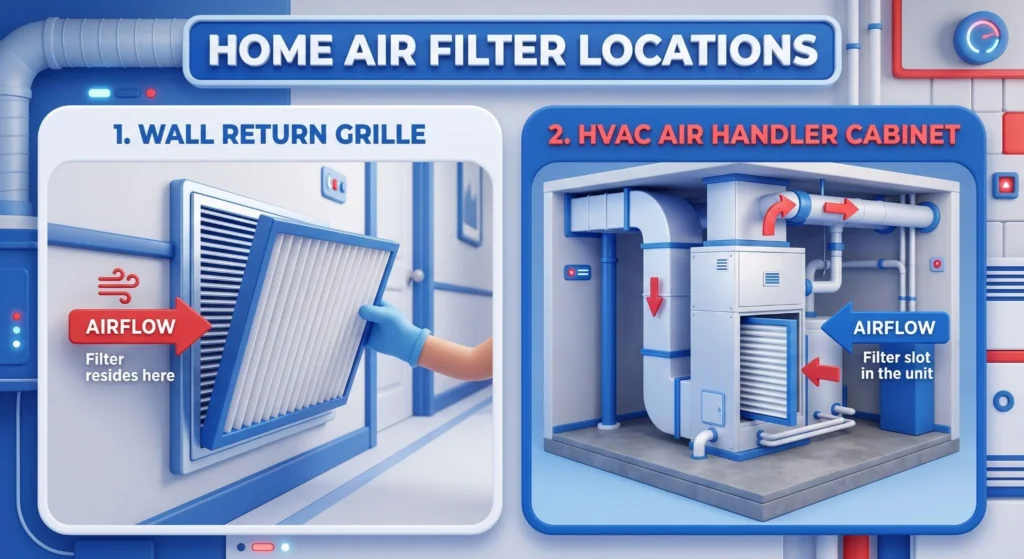
Filter location depends on how your home was built, and there are three usual answers.
Behind a return grille. Look for the oversized louvered vent on a wall or ceiling. It pulls air in rather than pushing it out. Hold a tissue up to confirm.
Inside the air handler cabinet. Common in Midlands homes with the unit in a garage, attic, or hall closet. The slot sits on the side, bottom, or front.
In a rack at the furnace. Look for a slim slot where the return duct meets the equipment.
Larger homes often have two or three return grilles, each holding its own filter. Replacing one and missing the others is the single most common thing we find on service calls.
How to Read the Size on the Filter Frame
Pull the old filter and read the edge of the cardboard frame. You will see three numbers, such as 16x25x1. That is length, width, and depth in inches.
Buy that exact size. A filter that runs small leaves gaps at the edges, and air takes the easy path around it. If the old filter is missing, measure the slot opening and round to the nearest standard size. Photograph the frame before you throw it out. That saves a second trip to the store.
Choosing a MERV Rating Your System Can Actually Handle

MERV measures how much a filter captures. Higher numbers catch finer particles and push back harder against your blower.
| MERV | Good fit for | Watch for |
| 8 | Standard homes, no pets, no allergies | Fine for equipment, limited help for allergies |
| 11 | Pet owners, mild allergy symptoms | Performance varies a lot by brand |
| 13 | Asthma, allergies, infants at home | Confirm your system can move air through it |
Two findings from a peer-reviewed study of 50 residential filters are worth knowing before you buy. First, MERV 13 filters removed a median 70 percent of fine particles compared with 30 percent for MERV 8. Second, depth matters as much as rating. One-inch MERV 13 filters created more than twice the airflow resistance of four-inch MERV 13 filters. If your cabinet accepts a thicker filter, you get the same filtration with far less strain on the blower.
How to Replace HVAC Filters in Six Steps
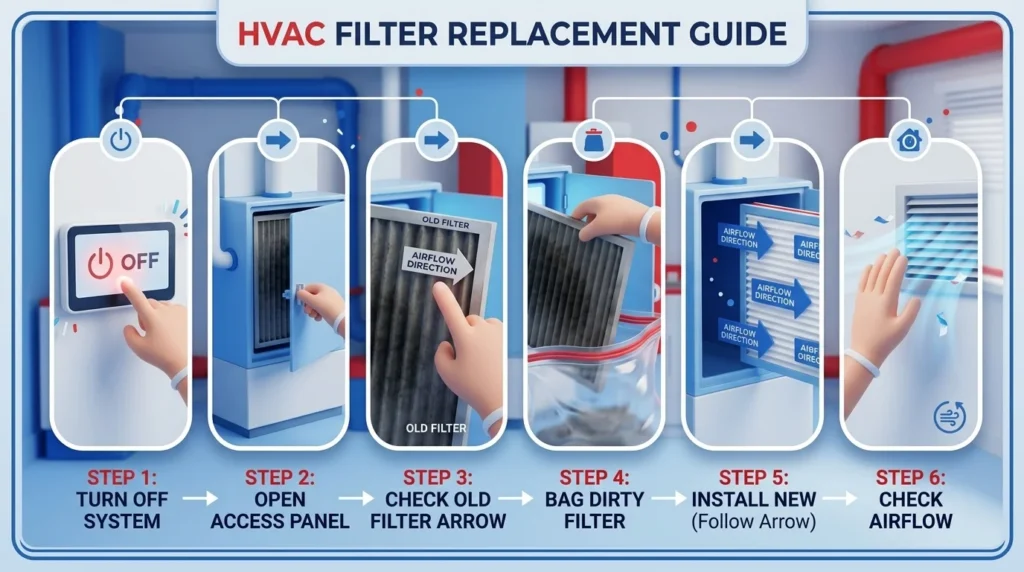
These steps cover central air conditioners, furnaces, and heat pumps. Work in order and you will not have to redo it.
- Shut the system down at the thermostat. Set it to Off, not to fan-only, and wait for the blower to stop spinning.
- Open the grille or access panel. Some unclip, some swing open, some need two screws backed out.
- Note the arrow before you pull. Look at which way the arrow on the old frame points, then slide the filter out at a slight angle so trapped dust stays put.
- Bag the old filter immediately. Seal it before you carry it through the house.
- Wipe the slot and seat the new filter. The fit should be snug with no daylight at the edges.
- Close up and restart. Hold your hand at a supply vent and confirm the airflow feels normal.
Which Way Does the Arrow Point?
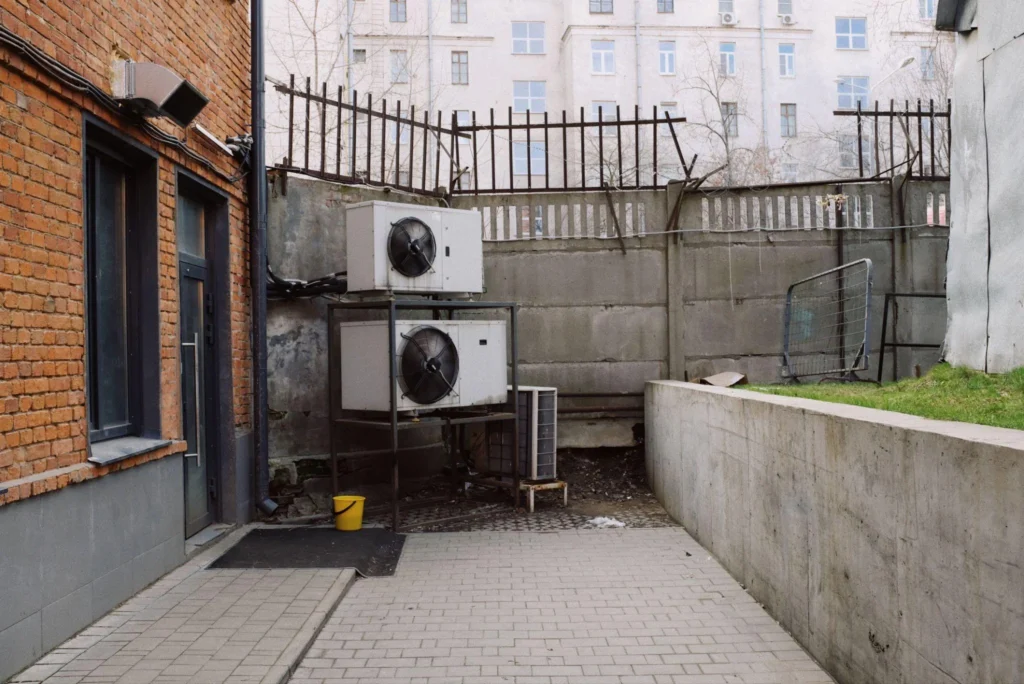
The arrow follows the air, and the air is traveling toward your equipment.
Air leaves your rooms, passes through the filter, and enters the blower. So the arrow points away from the room and toward the furnace or air handler. At a wall return, that means the arrow points into the wall. At the equipment, it points at the blower.
Install it backwards and the pleats face the wrong way, airflow drops, and the system works harder for the same result.
Replacing Filter? First Time Owner: How Do I Know the Right Filter to Get?
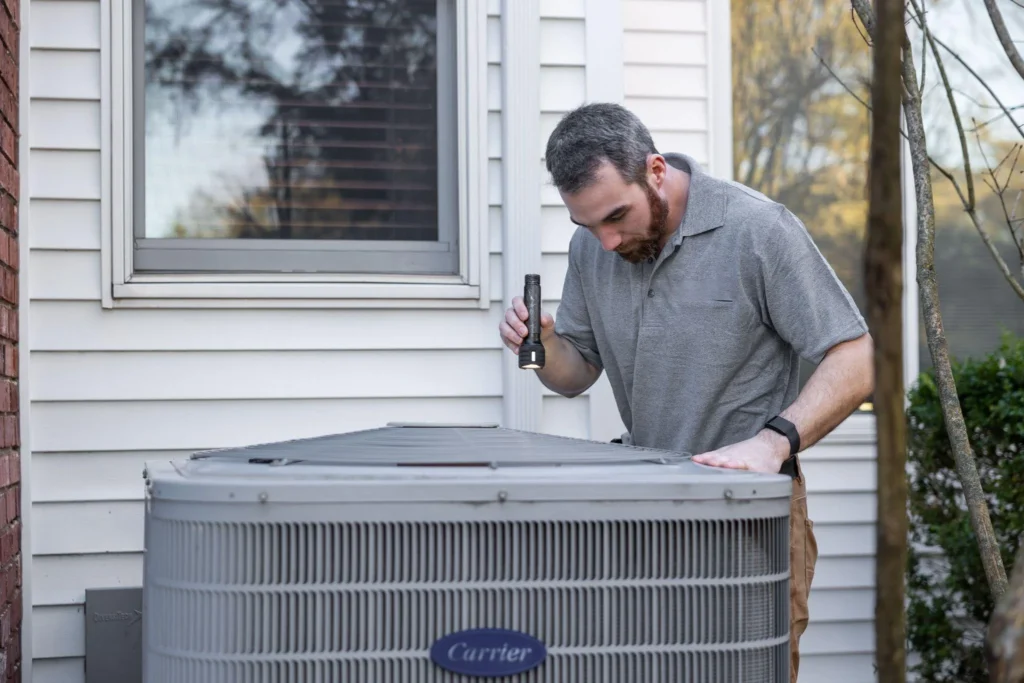
Someone new to homeownership asks a version of this every week, and the answer is simpler than the panel looks.
- You almost certainly do not need a professional. Two screws and a filter swap is homeowner work.
- The old filter tells you what to buy. The size is printed on the frame. You do not need the model number of the unit.
- The alert is a timer, not a sensor. It counts run hours. It has no idea how dirty your filter actually is, so inspect before you trust it.
- Condo and apartment units are different. Vertical stack and through-wall units often use a small washable screen rather than a pleated filter, and your building may stock the correct part.
- Write it down. Mark the size and arrow direction on the cabinet with a marker so next time takes two minutes.
If the panel is painted shut, the screws are stripped, or reaching the unit means an attic ladder you do not feel steady on, that is a fair reason to call someone.
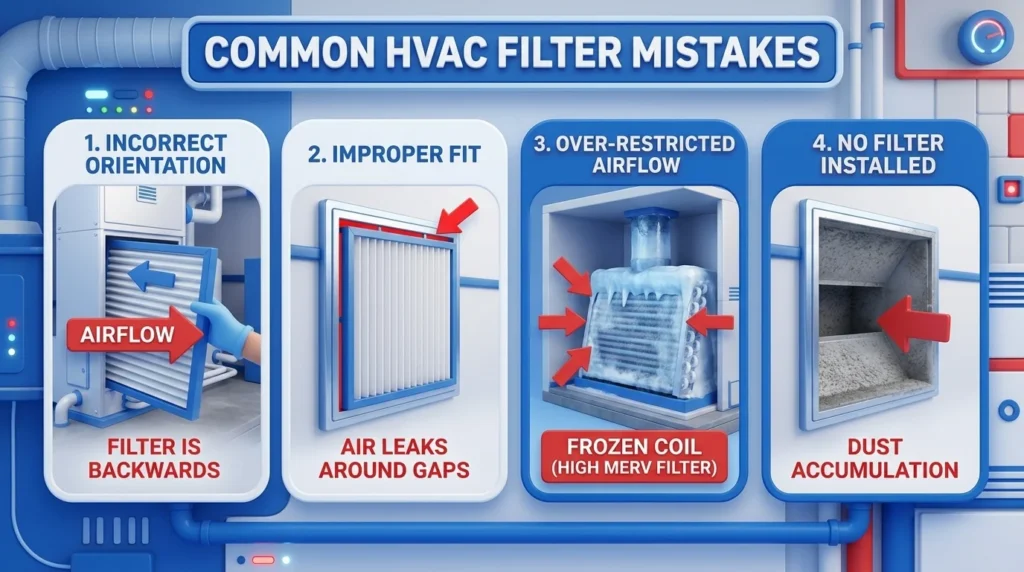
Common Mistakes That Cost Homeowners Money
Four errors account for nearly every filter-related call we take.
- Backwards installation. The most frequent one by far. Check the arrow twice.
- Wrong size. Gaps at the edges let dust bypass the media entirely.
- Too high a MERV for the equipment. A restrictive filter in an older system starves the coil, and a starved coil can freeze.
- Running with no filter at all. Even one week coats the evaporator coil, and cleaning a coil costs far more than a filter.
How Often to Change a Filter Around Lake Murray and Columbia

Most homes need a fresh filter every 60 to 90 days. That national number assumes a system that rests, and systems in the Midlands do not rest much.
Around Chapin, Lake Murray, and Columbia, cooling equipment runs from roughly April into October, and July afternoons keep it running most of the day. A filter that would last 90 days in a milder climate loads up well before that here. Spring adds a second problem, because pine pollen coats everything in the Midlands for several weeks and your return grilles pull it straight indoors.
A schedule that works locally:
- June through September: check monthly, replace when it looks gray
- Spring and fall: stretch back toward the 90 day mark
- Winter: check at 60 days if you run heat regularly
- Pets, allergies, or recent renovation: every 30 to 45 days year-round
Filter checks are part of every visit under our preventive maintenance plans, so it stops being something you have to remember.
Can You Clean a Filter Instead of Replacing It?
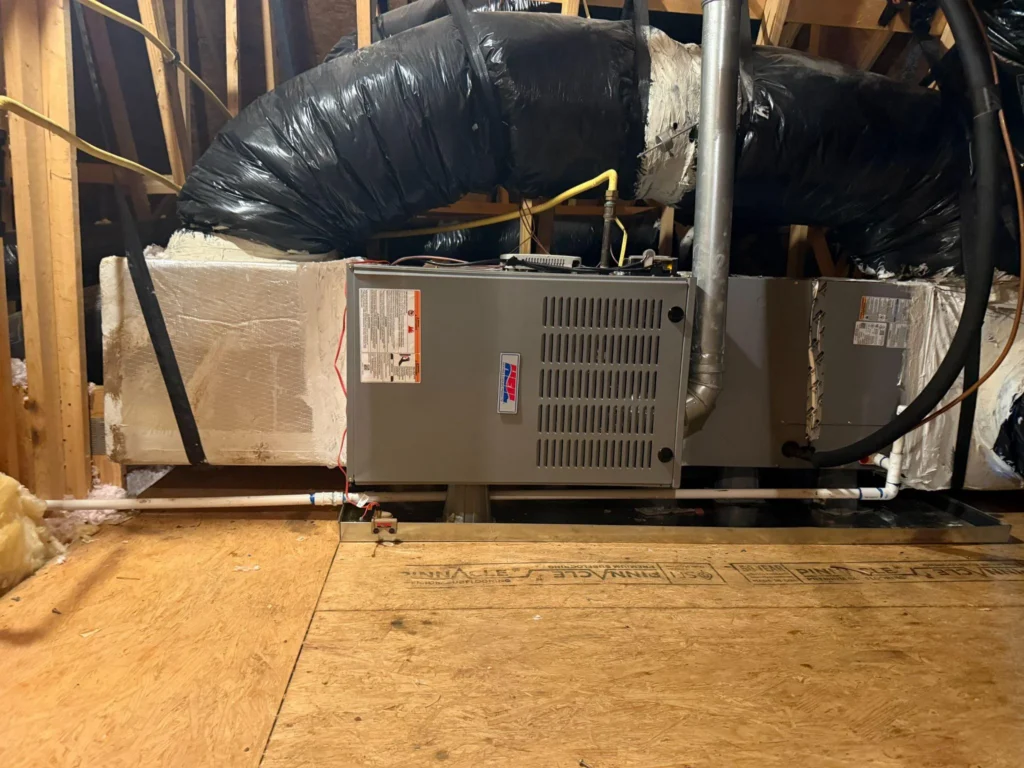
It depends entirely on which type you own, and getting this wrong ruins the filter.
Disposable fiberglass and pleated filters cannot be washed. Water collapses the media. The filter looks clean afterward and stops working properly.
Washable and electrostatic filters are built for it. Shake off the loose debris outside, rinse with low-pressure water running from the clean side outward so the dirt exits the way it came in, and let it dry fully. Never reinstall a damp filter. In our humidity, a wet filter sitting in a dark cabinet is exactly how mold gets started.
Warning Signs a Dirty Filter Is Hurting Your System
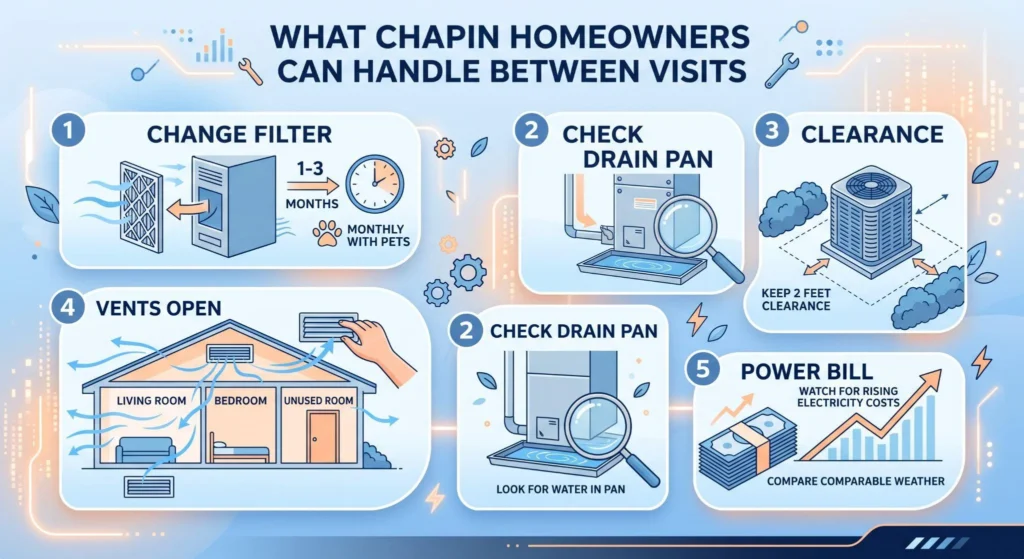
A clogged filter shows up in your comfort and your power bill before it shows up as a breakdown.
- Weak airflow at the supply vents, with rooms that feel stuffy
- Longer run times without reaching the temperature you set
- A power bill climbing with no change in how you use the house
- Dust returning to surfaces days after you clean
- Ice on the refrigerant line or indoor coil, which points to badly restricted airflow
- A straining or laboring sound from the blower
If airflow stays weak even after a fresh filter, the filter was not the problem.
How to Check the New Filter Is Doing Its Job
Give it ten minutes, then confirm three things.
Stand at the two supply vents furthest from the unit and feel for steady air. Listen at the return grille for whistling, which usually means a gap at the filter edge or a rating too restrictive for the system. Then check the thermostat in an hour to confirm the house is reaching setpoint. If any of the three is off, pull the filter and look at the arrow first.
When to Call a Licensed Technician
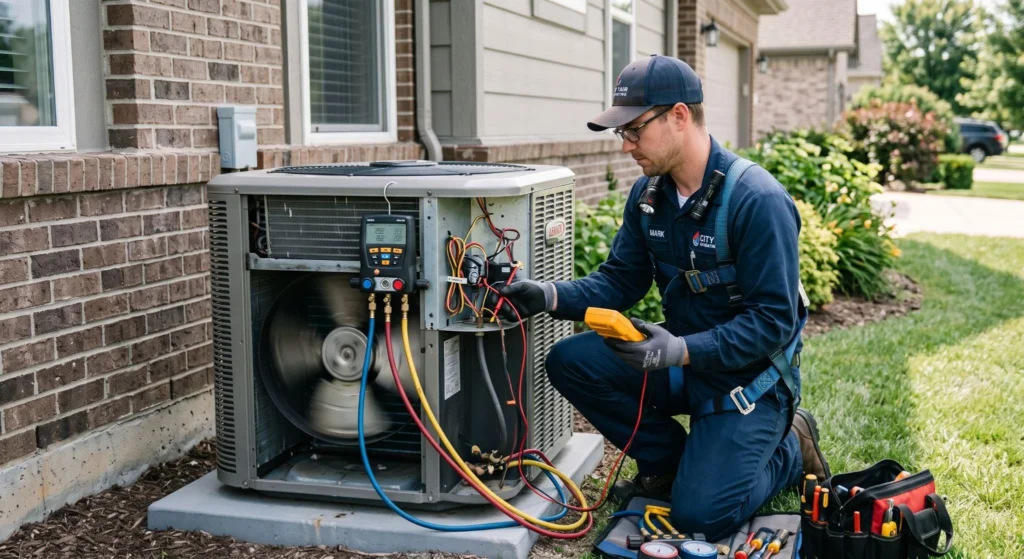
Filter swaps are homeowner work. These situations are not.
- The slot shows mold, standing water, or pest activity
- Airflow stays weak after a new filter goes in
- Nobody knows how long the system ran without a filter, which usually means the coil needs cleaning
- The unit is in a spot you cannot reach safely
- You manage a business property, where commercial rooftop and split systems often run multiple filter banks on different schedules
What Homeowners Across the Midlands Say About Wagner

Wagner HVAC and Refrigeration holds a 5.0 rating across 18 Google reviews, and the themes repeat.
Customers describe the crew as professional and efficient, and several mention same-day service. One homeowner had gathered four bids and chose Wagner for a quality product with no add-ons. Another wrote that the team explained what they were doing and why, kept the work area clean, and welcomed input from the homeowner. That explain-as-you-go habit comes from the top. Joe Wagner has 23 years in the trade, most of it in South Florida and the last five here in South Carolina, and the company holds SC Mechanical Contractor License #CLM.118927.
Put Your Filter on a Schedule and Stop Thinking About It
A ten-minute filter change protects the most expensive equipment in your house, and a Midlands schedule beats a national one every summer. Get the size right, point the arrow at the equipment, and check it monthly through summer.
If airflow still feels wrong after a fresh filter, or you would rather have someone handle it as part of a full system check, call (803) 575-2919 or request a free estimate and we will find what the filter cannot.
FAQs About HVAC Filter Replacement
Can I run the system for a day without a filter?
No. Dust reaches the coil within hours, and coil cleaning is not a cheap visit.
How do I know it needs changing before the calendar says so?
Hold it up to a light. If light barely passes through, or the media looks gray instead of white, replace it.
Is a higher MERV always better?
No. Filtration only helps if your blower can still move air through it.
FAQs About Wagner HVAC and Refrigeration
Do you service homes as well as businesses?
Yes for heating and cooling. Refrigeration and ice machine work is commercial only.
Is Wagner licensed and insured in South Carolina?
Yes. The license number is CLM.118927.
Which areas do you cover?
Chapin, Columbia, Lexington, Irmo, Ballentine, Little Mountain, and the wider Midlands, from our Chapin HVAC contractor office location.