
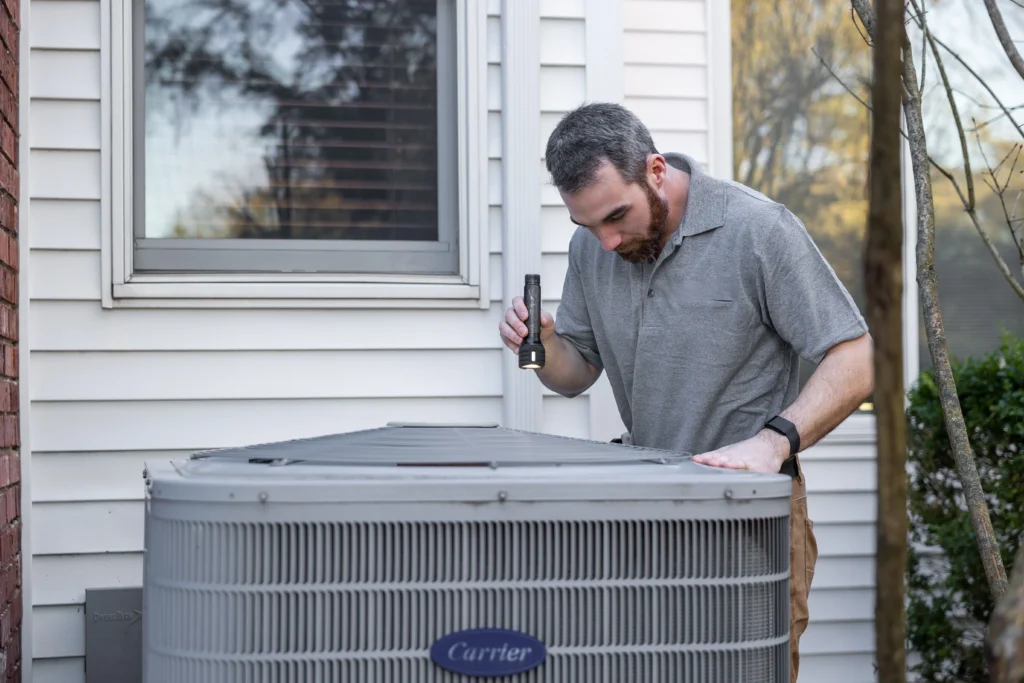
You turn the thermostat down, the outdoor unit kicks on, and you can hear air moving through the vents, but the house stays warm. An air conditioning unit running but not cooling house indoor areas is one of the most common calls our residential HVAC team takes every South Carolina summer. The cause can be anything from a five-minute fix to a same-day repair.
A running system and a cooling system are two different things, and figuring out which one you have is the first step. It’s also worth knowing that letting a struggling system run for days while you put off the decision rarely helps, and often adds wear that turns a cheap fix into a costly one.
Key Takeaways
- A running AC and a cooling AC aren’t the same thing. A system can move air without pulling heat out of the house, which is why the outdoor unit humming along doesn’t guarantee comfort.
- Start with the free checks: thermostat mode, filter condition, vent positions, and the outdoor unit’s clearance.
- A frozen coil, a refrigerant leak, a bad capacitor, or a failing compressor all call for a licensed technician, no exceptions, since running the system through any of these tends to make the eventual repair bigger.
- Annual maintenance before peak season prevents most of these problems from turning into a mid-summer emergency.
Air Conditioning Unit Running but Not Cooling House: Quick Checks
Before you assume the worst, rule out the causes that homeowners fix themselves every day. These cost nothing, take a few minutes each, and solve the problem more often than people expect.
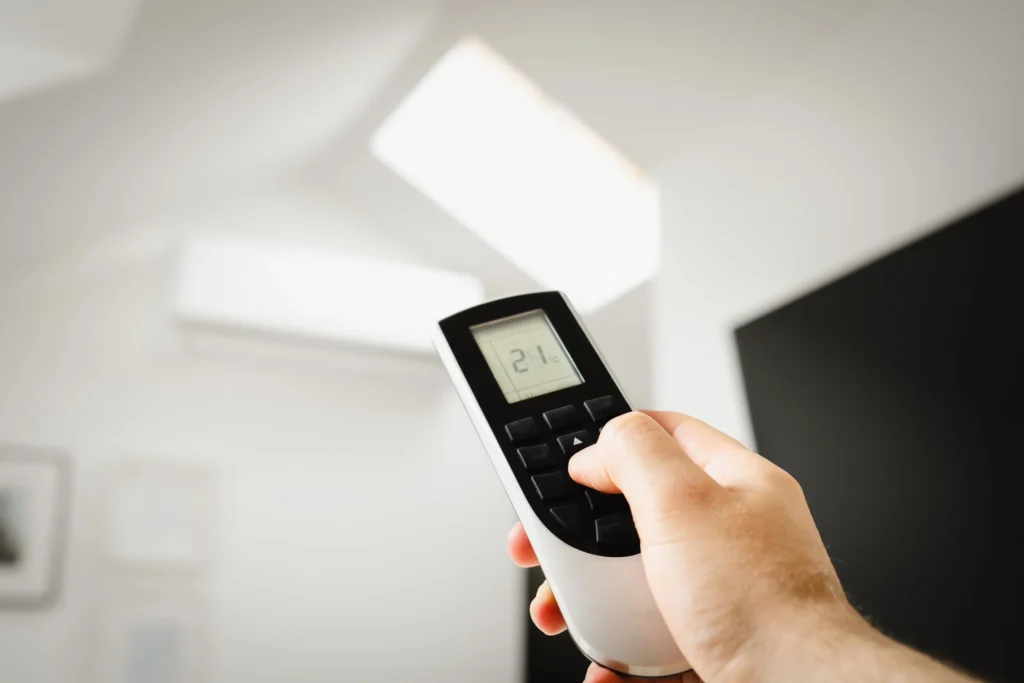
- Thermostat set to “ON” instead of “AUTO.” This makes the fan circulate room-temperature air even when the system isn’t actively cooling, so it feels like the AC is working when it isn’t. Switch it to “COOL” and set the temperature a few degrees below the room temperature.
- Dirty air filter. A clogged filter restricts airflow to the evaporator coil, so the system runs without pulling heat out of the house. Check it monthly and replace it every one to three months.
- Closed or blocked vents. Closing vents doesn’t redirect airflow; it just raises pressure in the ductwork and cuts efficiency. Open all supply and return registers and clear furniture away from them.
- Dirty outdoor condenser. Blocked fins can’t release the heat pulled from inside the home. Clear two feet around the unit and rinse the fins with a garden hose, not a pressure washer.
If you’ve worked through all four and the house is still warm, the problem is probably mechanical rather than a setting, and it’s time to stop guessing and start looking at the equipment itself.
Signs the Problem Needs a Licensed Technician
Once the easy checks are ruled out, the remaining causes usually involve a component inside the system rather than something you can see from the outside.
Running the unit while these persist tends to turn a manageable repair into a much more expensive one, so it helps to know what you’re looking at before you decide what to do next.
- Frozen evaporator coil. You’ll see ice on the unit or the lines, along with weak or warm airflow. The root cause, whether that’s airflow or refrigerant, has to be fixed, or it will refreeze.
- Refrigerant leak. Listen for hissing near the lines, or feel for warm air from every vent despite a clean filter. Handling refrigerant legally requires EPA Section 608 certification, and exposure to a leak can cause headaches or nausea.
- Undersized unit. It runs constantly and never reaches the set temperature. That needs a proper load calculation, not another repair visit.
- Leaky ductwork. One room stays warmer than the rest, and energy bills climb. That needs pressure testing and professional sealing.
- Failing compressor or capacitor. Listen for loud humming, clicking, or a breaker that trips repeatedly. The compressor is the most expensive part to lose if it’s ignored.
None of these five is a weekend project, and topping off refrigerant or swapping a capacitor without diagnosing why it failed in the first place usually just delays the same call by a few weeks.
Simple Fix or Serious Problem? How to Tell in Five Minutes
You don’t need a background in HVAC to sort this out. Scan the table below and see which column matches what you’re seeing.
| Handle It Yourself | Call a Professional Today |
| Thermostat fan is set to “ON” instead of “AUTO” | Ice is forming on the unit or the refrigerant lines |
| Filter is visibly gray, clogged, or months overdue | You hear hissing or bubbling near the indoor or outdoor unit |
| Vents are closed or blocked by furniture | Every vent blows warm air even with a clean filter |
| Debris or overgrown plants are crowding the outdoor unit | The breaker trips more than once |
| The outdoor unit is grinding, clicking, or humming loudly |
If anything under “Call a Professional Today” applies, scheduling a diagnostic quickly protects the compressor and usually keeps a manageable repair from turning into a full replacement down the road.
Why Preventive Maintenance Keeps This From Happening Again
Joe Wagner, who has spent 23 years in this trade, sees the same pattern on almost every emergency call: the AC that finally quit was almost always the one that never got a tune-up.
A dirty filter left in place for a year, a condenser buried in pollen since spring, a capacitor that had been weakening for months before it finally gave out. None of that shows up as a problem until the hottest week of the year, when the system is working its hardest and has the least room for error.
That’s the real case for maintenance. It isn’t an upsell; it’s what keeps small issues small.
A yearly visit covers most of what causes the problems above:
- Filter replacement on schedule
- Condenser clearing before pollen season
- Refrigerant level checks
- Coil cleaning
- Capacitor testing
Wagner’s preventive maintenance plans are built around catching problems before they’re emergencies, which matters most in a climate with long, humid summers and heavy spring pollen, where a system already runs longer hours than it would in a milder region.
What to Expect From a Professional AC Diagnostic
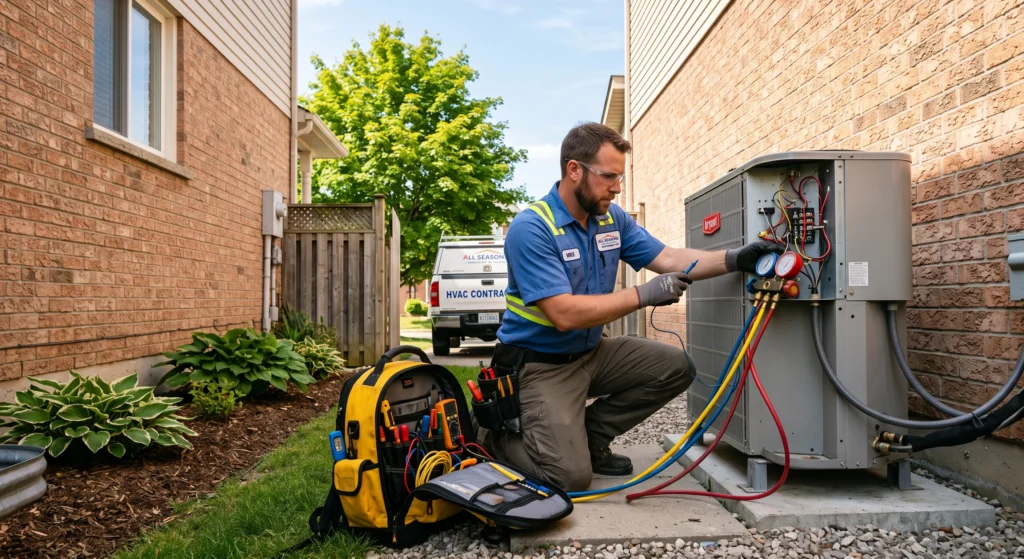
If the quick checks don’t solve it, a technician’s visit typically follows this order:
- Verify the thermostat settings and airflow
- Inspect the filter and evaporator coil
- Check refrigerant pressure
- Test the capacitor and compressor
A straightforward fix, like a capacitor or a filter, is often resolved on the same visit. What takes longer is a refrigerant leak, since it has to be located and repaired before the system can be recharged, or a full replacement when the unit is undersized or the compressor has failed. Either of those can mean a return trip once parts or equipment are on hand, and a good technician will tell you that up front instead of leaving you guessing.
This is the same process behind every call, whether it’s booked through Wagner’s full range of HVAC services or a routine maintenance visit. Ask for the diagnosis in plain language before agreeing to any repair, and expect a straight answer about what’s actually wrong rather than pressure to replace a system that only needed a part.
Your AC Shouldn’t Just Run. It Should Cool.
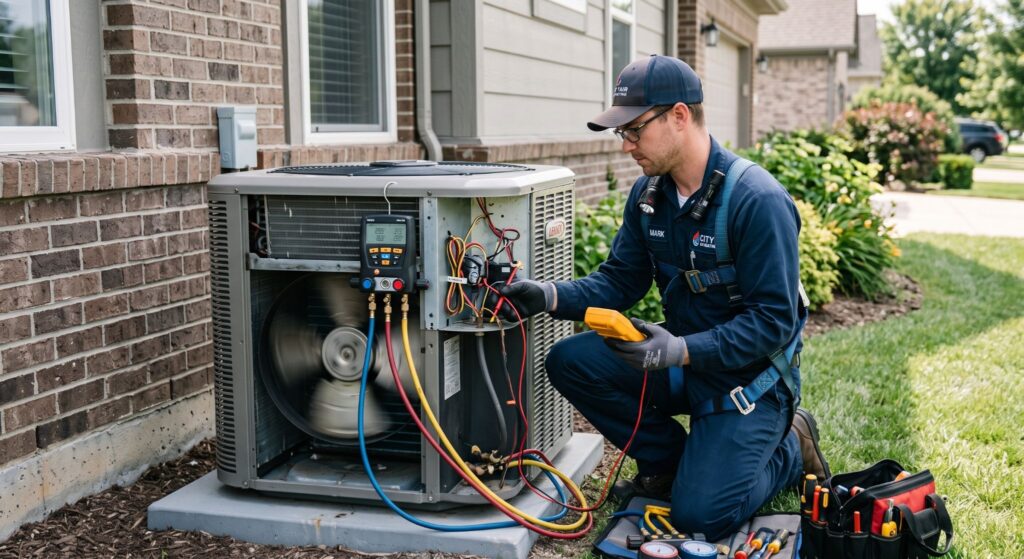
If your air conditioning unit is running but not cooling your house, especially in the middle of a South Carolina summer, don’t let it run indefinitely while you decide what to do. The longer a struggling system keeps working overtime, the more strain it puts on parts that are already failing.
Wagner HVAC and Refrigeration, an established HVAC contractor based in Chapin, SC, brings 23 years of honest, no-pressure diagnosis to every call, whether the fix is a five-minute filter swap or a full system repair. Schedule a same-day estimate and get a straight answer about what’s actually wrong, not just a running total on an invoice.
FAQs About Air Conditioning Unit Running But Not Cooling House
Why is my AC running all day but never cools the house?
Most often, an undersized unit, a refrigerant leak, or a dirty coil. Check the filter and thermostat first before assuming the worst, since those two fixes solve the problem more often than any of the mechanical causes do.
How long does a frozen coil take to thaw?
Usually two to twenty-four hours on “FAN ONLY” mode. Fix the underlying cause once it thaws, or it will freeze right back up.
FAQs About Wagner HVAC and Refrigeration
How much HVAC experience does Wagner HVAC and Refrigeration have?
Joe Wagner brings 23 years in the trade to every call, across both home systems and complex commercial equipment, and still handles the diagnosis on-site himself.
What other services does Wagner HVAC and Refrigeration offer?
Beyond residential AC repair, the team also handles commercial HVAC systems for local businesses, along with commercial refrigeration and ice machine service for restaurants and other facilities across the Midlands.